

One question that has bugged me for a while (many questions bug me, but some more than others) is the persistence of what I can only call the “Trading Mentality” in Nigeria. By this I do not simply mean that many Nigerians make a living from buying and selling things. Trade is indispensable to any economy. I mean something more specific: the tendency for trading to become the destination rather than the first rung - the point at which accumulated capital and commercial knowledge ought to begin moving into production.
Go back as far as you can in Nigerian commercial history and you see trading everywhere. Farming was obviously the dominant occupation across most of the territory that became Nigeria, so it would be wrong to say that most Nigerians were literally traders. But trade has long been one of the dominant routes into business, wealth and social mobility. It cuts across society, from ordinary citizens to the elite. A census of Lagos in 1911 recorded more than 21,000 people - about 46% of the “occupied” population, roughly those recorded as working - as traders or otherwise involved in trade.
Today, the pattern remains hard to miss. In the first quarter of 2026, the NBS category called Trade accounted for 17.9% of real GDP, narrowly making it the largest single economic activity in that quarter. The NBS’s 2023 labour survey found that the same broad category - wholesale and retail trade together with motor vehicle and motorcycle sales and repairs - employed 23.1 million people, or 27.5% of all employed Nigerians, second only to agriculture. And yes, this includes the market woman, the roadside hawker and the one-person shop, not just supermarkets and large distributors. As recently discussed, the Nigerian first lady believes this number to not be enough and so has been encouraging more people to go into trading.
In its darkest form, of course, trade meant people where for centuries, people made a profession out of trading their fellow human beings. Even after the Atlantic trade was outlawed and gradually suppressed, slave dealing and domestic slavery did not disappear on command. In Northern Nigeria, for example, the 1901 proclamation banned slave-raiding and removed the legal status of slavery but did not prohibit slaveholding itself; formal abolition did not come until 1936. I am not suggesting a straight line from that history to the woman selling tomatoes by the roadside. The point is simply that buying, selling and acting as the middleman have very deep roots in the economic history of the country.
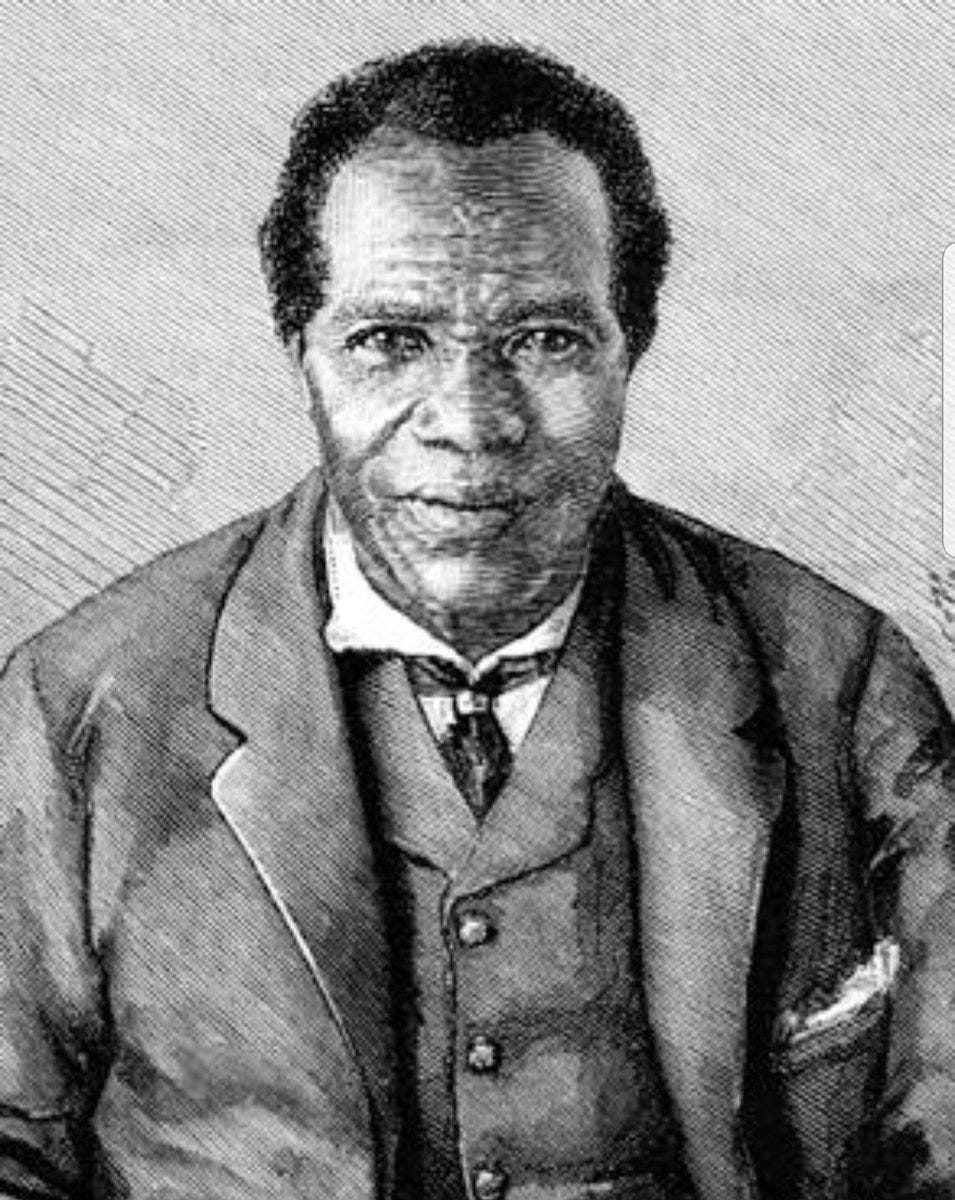
Trade by itself is of course not a problem. People have been known to begin life as traders before moving on to other endeavours such as manufacturing. Nor is that transition entirely foreign to Nigerian history. Peter Thomas, one of the great Lagos merchants of the early twentieth century, used his trading fortune to build a tannery and a corn-flour mill, acquire a printing press and establish a farm. He wanted West African products to be partly or wholly manufactured in West Africa rather than simply exported raw. What failed to emerge was a broad and durable process through which merchant capital became industrial capital.
The Gujarati merchant communities of India are a more successful example. They spread across the world through trade, but trade became a platform rather than their ceiling. They used the profits, networks and discipline of trade to climb the value chain. Gujarat now accounts for roughly a quarter of India’s merchandise exports and is adding semiconductor and aerospace capability to its established industrial base. In June 2026, the first C-295 military transport aircraft assembled in India completed its maiden flight from Vadodara, Gujarat. It came from the Tata–Airbus plant, where more than 85% of the structural and final assembly of the 40-aircraft programme will be done in India, alongside the manufacture of about 13,000 detail parts. This is plainly a long way from merely buying and selling. It is capability being accumulated.
The problem is when trading becomes so sticky that people - ordinary citizens and the elite - do not or cannot move into a higher gear. These are not morally equivalent cases. The woman hawking tomatoes because she cannot find better work and the conglomerate lobbying for an import ban are not doing the same thing. One is survival; the other is strategy. But they are not as far apart as they might look inside the same economy in which buying and selling is much easier and safer to enter.
So much so that even when it looks as though people have moved up into manufacturing, look closer and you often find a sophisticated form of trading: import most of the inputs, perform the minimum local processing needed to qualify as a producer, attach a Nigerian label and sell into a protected market. In the extreme version of this phenomenon, the government gets involved to reduce choice. Tariffs, bans, quotas, licences and preferential access create a captive market. The beneficiary groks that controlling access to the product is easier and more profitable than acquiring the capability to make it competitively. The trader dressed as a manufacturer can end up far more profitable than the actual producer of the thing being sold. This was the F.O.O.D thesis in summary.
When the Trading Mentality has gone this deep, it becomes a kind of doom loop. Trading often offers quicker turnover, lower fixed costs and enough profit that there is almost no incentive to pursue the riskier work of building productive capability. Once government policy adds artificial scarcity and privileged access to the mix, remaining a trader may be the most rational commercial choice. And so the day of development (not growth) is forever postponed.
Where did this Trading Mentality come from and why is it so persistent? I have no idea. For several months now, I have been exploring this question and I cannot say I am much closer to an answer than when I started. But I increasingly suspect that “mentality” may describe the outcome more than the cause. William Baumol’s old point was that entrepreneurial energy can be productive, unproductive or destructive depending on the relative rewards created by the rules of the game. If the rules consistently make arbitrage safer and more profitable than production, Nigerians who choose to trade may simply be reading the incentives correctly.
A declaration of war
Social media is one of the better vantage points on contemporary Nigeria, and lately something has caught my eye: alongside the flood of Chinese electric vehicles into the country, the Chinese themselves are quietly muscling in on one of Nigerians’ favourite trades - car dealing. Dealers have been part of the social fabric in Nigeria for as long as I can remember, from Tunde Debasco to today’s Sarkin Mota. They turn up in praise songs and are upstanding members of society, at least until they aren’t.
Recently I came across the video below on Instagram, breaking down what it costs to buy a car in China and ship it to Nigeria (it is one of those Nigerian absurdities where, almost uniquely in the world, people import their own cars):
In the video, Xuanshiauto walks through the cost of getting a car from China into Nigeria. The car itself costs ₦15 million (roughly $10,700); by the time every charge and tax has been added, it costs ₦26 million. Transparency of this kind is already a hostile act. Information asymmetry and confusion are not incidental to the Nigerian car trade - they are the very business model. The Chinese gentleman in the video presents his calculator as a public service: leave a comment, he says, and he will send you a copy, free. He never explains why he is being so generous, but by the end you don’t need telling. Xuanshi Auto is not an educational charity. It is a vehicle-export business based in Ningbo which sources cars, inspects them, arranges payment and shipping, prepares export documents and connects foreign buyers to Chinese wholesale supply.
He then shows the same car advertised in Nigeria for ₦45 million. If his landed-cost calculation is accurate, and if the asking price is achieved, the difference is more than ₦19 million: a markup of roughly 74% on the landed cost, or a gross margin of about 43% on the selling price.
Anecdotally, I have heard many versions of this story of the Chinese squeezing out the middleman and taking over the trade for themselves. A couple of years ago a friend told me about a nice business he had going, sourcing materials in eastern Nigeria and delivering them, at a very healthy markup, to Chinese buyers in Lagos who shipped them home. It lasted about six months. Then he travelled east one day and found his customers already in the market, negotiating for the goods directly. It was fun while it lasted; he moved on to something else.
The factory comes for the trader
Let’s zoom out for an overview of the Chinese economy today. One of the more astonishing facts of the last few years that I have to read multiple times is that, between 2008 and 2017, China’s banking system added roughly $29 trillion in assets - equivalent to about one-third of annual global GDP. Bank assets are not the same thing as government spending, and not every dollar represented a conventional loan, but the figure gives a sense of the credit machine Beijing put into overdrive after the global financial crisis.
The stimulant worked. It financed houses, roads, railways, local-government projects and an enormous expansion of productive capacity. For years, it supported both growth and domestic demand and helped to build much of modern China. The problem is the hangover. A banking system cannot continue expanding at that speed indefinitely without accumulating bad investments, heavily indebted borrowers and projects that remain viable. Nor can property continue carrying an economy forever.
China’s property market began its prolonged correction in 2021. This extends well beyond construction because housing accounted for 47% of Chinese household assets in 2022. Falling house prices have therefore weakened not only property developers but household balance sheets and confidence. Local governments have also suffered because many depended heavily on land sales and property development for revenue.
Beijing still has plenty of tools and is not remotely powerless. But the old trick of opening the credit taps and getting another surge of property and infrastructure investment is not so easily repeated. This leaves China with a peculiar imbalance. It is exceptionally good at financing production and less good at giving households the security and confidence to consume. It manufactures much of the world’s wigs and widgets and a growing share of its cars, batteries, solar panels, industrial machinery and electronics. Estimates are that China produced 29% of global manufacturing value added in 2023.
Chinese firms possess real and formidable advantages: scale, engineering capability, dense supplier networks, modern infrastructure, efficient ports and an increasingly sophisticated technological base. Their products are often both cheaper and better than they were even ten years ago. But weak demand at home makes the export option more urgent, while ferocious domestic competition makes foreign margins more attractive. China now has a word for the destructive version of this competition: “involution” - firms work harder, add capacity and cut prices, but profits keep shrinking. Beijing has even launched an “anti-involution” campaign to restrain excessive investment and price wars in some industries.
The country ended 2025 with a record goods-trade surplus of $1.189 trillion. Its exports to Africa rose by 25.8% during the year, even as its exports to the United States fell sharply. The Chinese car exporter turning up on Nigerian Instagram is not an isolated hustle. He is one tiny part of a much larger movement towards markets where Chinese firms can sell more goods, escape brutal competition at home and earn better margins.
The Economist recently supplied an almost perfect example:
The Chinese firms are eager to export partly because pickings at home are slim. In China they have been able to scale up their projects and bring down the unit cost of pricey hardware. Taxi companies have also been able to collect real-time data to make cabs run smoothly. But the economics still do not work, mainly because a glut of cab drivers is keeping fares low. Newly jobless workers often become cabbies, adding to supply. Baidu, which in 2025 said its robotaxis in the central city of Wuhan had broken even, has not bragged about them since. Pony.ai, a rival, claims it has broken even in Chinese cities.
Foreign markets look far more appealing, especially if developers can deploy their low-cost technology and data from China in places where they can charge more. A ten-kilometre taxi ride in Wuhan costs around 23 yuan ($3.40), whereas the fare in St Gallen, a canton in eastern Switzerland, is a juicy SFr44 ($54). Such arbitrage probably explains why Chinese companies are now more focused on expanding abroad than on operations at home. Baidu no longer releases updates on its Chinese fleets and provides information only on its foreign ventures.
Countries like Nigeria are almost powerless to resist this unstoppable force coming out of China.
An affront to a producer
Now zoom back in to better understand what is going on in that video. What the Nigerian market has trained everyone to regard as perfectly normal - applying a large markup to something you had no hand in producing, without adding anything like commensurate value - must look almost like an affront to a Chinese entrepreneur accustomed to extremely brutal competition at home. My extremely good friend, Aliko Dangote, is the perfect encapsulation of this Nigerian normality - he has not invented or innovated anything and yet is far more profitable than any cement maker in China (it’s not even close) where he buys his technology from.
To the Chinese seller, the ₦19 million spread is a blockage in the pipe. If the price of the vehicle in the Xuanshi Auto video fell by, say, ₦5 million, it would come within reach of some people who are currently priced out. Drop it by another ₦5 million and the pool of potential buyers widens again. In other words, from the point of view of the Chinese seller, the margins being enjoyed by Nigerian dealers stand in the way of the thing he wants most: selling more cars. Every naira absorbed by an avoidable layer of intermediation raises the final price and reduces the number of vehicles the Chinese supply chain can move. Given the pressure on Chinese firms to find demand outside their increasingly unforgiving domestic market, that margin starts to look less like somebody else’s legitimate reward and more like the next cost to be eliminated.
There is an important irony here in that Xuanshi Auto is also a trader. But it is a trader sitting almost on top of the productive system, with access to factory inventories, wholesale prices, shipping lines and export documentation. Its business model is to shorten the distance between the factory and the final customer whereas the Nigerian dealer’s business model depends on keeping that distance as wide as possible.
A ₦19 million spread would of course be nice. But the Chinese exporter does not need to capture the whole thing. He can take a much smaller slice, pass part of the saving to the Nigerian buyer and still come out ahead if the lower price allows him to sell more cars. His relevant choice is between a thinner margin on more cars abroad and an even thinner margin - or an unsold car - at home and so he optimises for throughput.
Unstoppable force, meet immovable object
All the actors in this drama are new to the particular game they are now playing. China has never been this powerful or this productive. It has also rarely had so much industrial capacity searching for buyers at a time when its property market is weak and domestic demand is not doing enough of the work. Nigeria, meanwhile, has never been as economically intertwined with China as it is now. In the first quarter of 2024, China supplied 23.2 per cent of Nigeria’s merchandise imports. Two years later, in the first quarter of 2026, its share had risen to 37.4 per cent - almost two out of every five naira Nigeria spent on imported goods.
For all that China is the world’s second-largest economy, it is still a country of 1.41 billion people with nominal GDP per capita of just under $14,000. It is rich enough in aggregate to possess a superpower’s industrial machinery, but still close enough to middle-income reality that small margins and difficult markets are not beneath its entrepreneurs.
For much of Nigeria’s modern history, dealing with foreign business meant dealing with firms from countries vastly richer than Nigeria. Their cost structures, salaries and ambitions created an unofficial floor below which they often did not descend. They took the oil rigs, and the large construction contracts while beneath them, Nigerians retained a large protected space as agents, distributors, importers and middlemen. The pattern is old enough to be grim. During the Atlantic slave trade, European buyers generally remained at the coast and relied on African merchants and political authorities to bring captives to them. The foreign buyer controlled one end of the chain, but the African middleman controlled the distance between him and the product.
China offers no such floor or guarantee. The same economic system that can build a railway with advanced technology can also send a man with a spreadsheet onto Nigerian Instagram to explain customs duty to individual buyers. There is no part of the commercial chain whose smallness automatically protects it. There is therefore no shortage of Chinese entrepreneurs willing to dive into the lower reaches of the Nigerian economy that local traders have long maintained as their fiefdom. Distance used to protect the Nigerian middleman. So did language, confusion, paperwork and the buyer’s ignorance. The smartphone steadily strips away all of those.
I do not pretend to know what will happen when this unstoppable force meets the immovable object. For one thing, the object is not really immovable. Nigerian traders are famously adaptable, especially when the alternative is extinction. They know the customer and the customs officer. Those are not trivial advantages and no foreign entrant can easily. Some dealers will cut their margins. Some will formally become agents for Chinese brands that impose strict limits on dealer markups. Some may even move upstream into assembly and components, while others will make themselves indispensable to the Chinese firms now trying to bypass them. Others will, inevitably, ask the government to protect them from the competition (for a long time I had a #CabalAlert hashtag going on twitter documenting the often comical ways in which Nigerians organised themselves to be noticed by the government). And some will simply be swept away.
A spreadsheet is not a gunboat, but…
Nor would this be the first time that a change in the terms of trade transformed Nigerian commercial society. The Niger Delta went through its own version of this in the nineteenth century. As the Atlantic slave trade declined, industrial Europe developed a huge appetite for palm oil, which was used to make soap and candles and to lubricate machinery. Bonny, New Calabar and later Opobo grew rich by standing between producers in the hinterland and European ships on the coast. The British called it “legitimate commerce”, but the central arrangement was that the foreign buyer waited at one end while African merchant houses controlled the route inland. The transition disrupted trading practices that had developed over centuries, created new social groups and destabilised the politics of the Delta.
Trade remade the Niger Delta by forcing the canoe houses to combine their commerce, political authority and military power. Through them, outsiders and enslaved people could sometimes rise, none more spectacularly than Jaja, who arrived in Bonny as an enslaved Igbo boy, became head of one of its most powerful houses and then founded Opobo. By the 1870s, he had become the dominant trader in the region. But the same trade that made Jaja powerful also made him vulnerable. British merchants increasingly regarded the Delta middlemen as expensive obstructions and demanded direct access to the producers in the hinterland. Jaja refused. He defended Opobo’s control of the inland markets and at times tried to bypass the British middlemen by shipping oil directly to Liverpool himself. In 1887, the British removed and exiled him.
Now before anyone comes for my head, I’ll be the first to say that the analogy should not be pushed too far. China is not Victorian Britain, Xuanshi Auto is not the Royal Navy and a spreadsheet calculator is not a gunboat. Nigeria is a sovereign state with its own political agency. But there is some rhyme to all of it. Once again, a foreign commercial system looks at a Nigerian intermediary and sees a tollgate. Once again, technology makes it possible to get round him. And once again, what begins as an argument about the price of a product may end by changing who organises the market.
We may therefore be standing at a profound moment in Nigerian culture without realising it. After all, few things have changed people as thoroughly as trade has over the centuries. It changes language, taste and status. It changes which skills are rewarded, what counts as a respectable profit and who is permitted to become powerful. Eventually, it changes the organisation of society itself. And the first signs of cultural change are often banal: a new price, a new route, a new word, or a customer discovering for the first time what something really costs.
Perhaps the most consequential thing China is now exporting to Nigeria is not the electric car itself or any other cheap product. It may be a different idea of what a trader is for which is not merely to defend the largest possible margin on every sale, but to lower the price, enlarge the market and keep the goods moving. The Chinese trader may simply want to capture the margin for himself but the Nigerian middleman may disappear without anything resembling Nigerian productive capacity emerging in his place.
Either way, that old bargain is now under threat. The Nigerian trader has long been protected by the fact that the factory was far away.
Maybe no more.
What if we hypothesize that manufacturing is an offshoot of culture? That might lead us to ask the question: what cultural traits create and sustain manufacturing at scale? And to then examine the relative presence of those traits in our culture and those of societies with manufacturing as entrenched industry.
Take a trait like precision. This is central to repeatability. If you create something that you can’t recreate repeatedly, that’s art.
Next, take codification. This enables reliable and durable transfer of your knowledge to enable others to do what you do precisely how you do it. i.e. scale.
Taking just these two, we can evaluate how high our culture ranks. On precision, think of herbs with no dosage, recipes with no measures, etc. What about codification? Traditions are mostly orally transferred, and I suspect that most people can’t even do something as basic as reliably trace their lineage past their great-grandfather.
A culture that ranks so low on these rudimentary traits will find it quite challenging to develop and sustain manufacturing as an industry.
These are not standalone traits; they compound individually and are mutually self-reinforcing. Precision as a discipline is critical to learning and improving, and codification builds a long-term knowledge base and shortens innovation cycles - together, they form part of the cultural gear system that drives manufacturing. I suspect that the absence of those traits also interacts in a similar fashion to create learned incapacity to build innovation systems.
Can we shift these tectonic plates in our culture? The answer is yes, but it will require intentional efforts to seed these and other traits in culture. I think the most consequential thing we can do to begin this work is to completely redesign what we incentivise. People don't do the 'right' things; they do the things that are rewarded.
I think the most important thing you highlighted here is the arbitrage and information asymmetry are big money makers in Nigeria, the rules of the game are what consistently produce the outcomes we complain about. From business to bureaucracy middlemen are everywhere profiting off the information asymmetry, consistently rewarded. The actual producers suffer, be it the pre colonial cloth production in Kano or modern day internal agricultural market, most of the profits go to middlemen.