I hope you all behaved yourselves while I was away in South Africa. You can watch a video of my talk with Joe Studwell here. I thought it came out of well but that’s for you to decide.
This week I wrote about how CNG has become the Nigerian government’s biggest idea in tackling the painful transport costs spike following the removal of fuel subsidies.
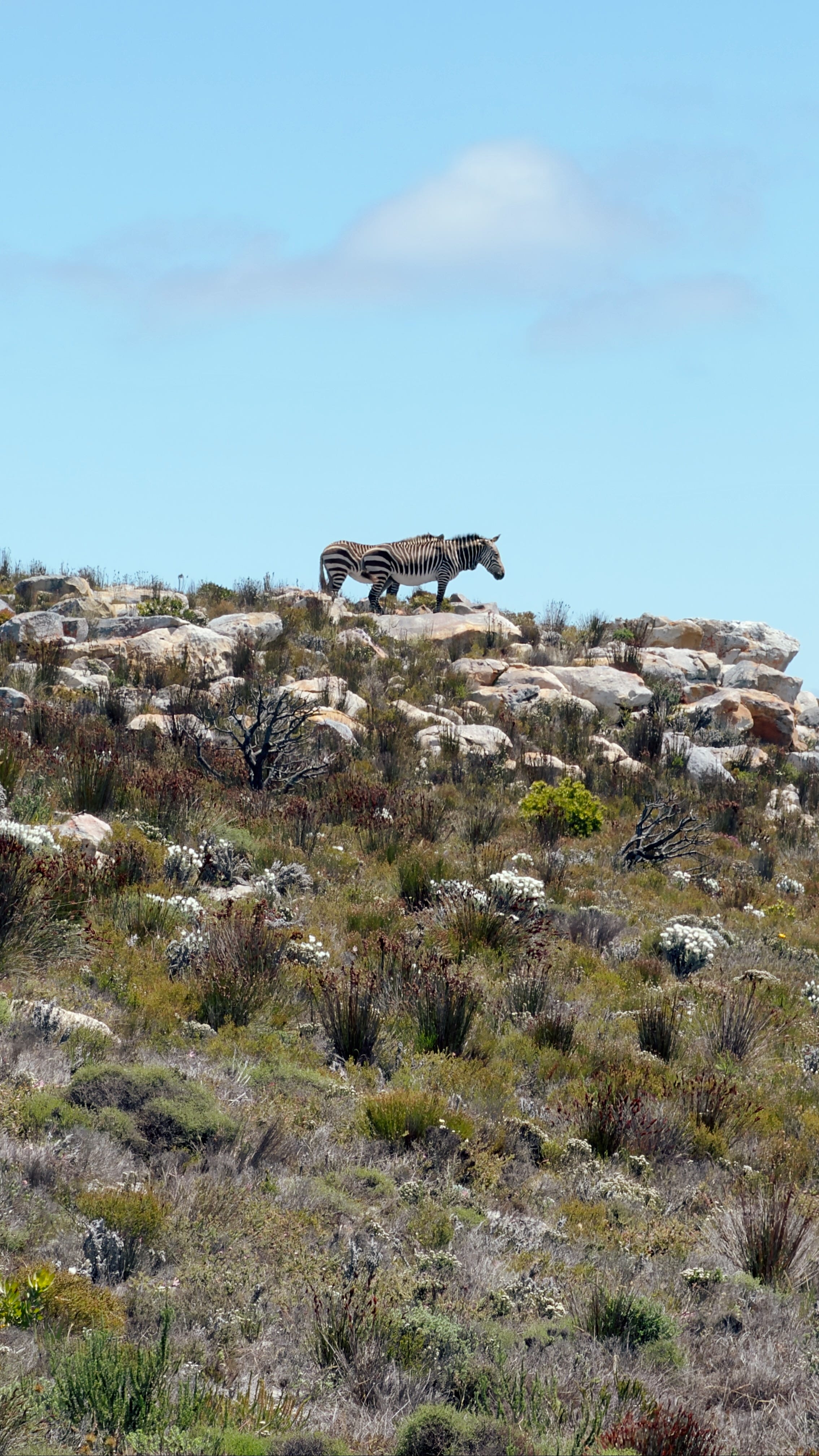
And just because I’m nice here is a photo for you to enjoy. While driving through Cape Point, I spotted something and asked the driver to stop. He looked and almost screamed and told me that in 25 years of driving there, he had only ever spotted Cape Mountain Zebras about 3 times. Enjoy the photo I took and the week’s selection below.
Nigerian Media
Feature on the problem of drug addiction in Nigeria:
But while Usman’s experience reflects the possibility of recovery, another drug user, popularly known as Adebayo Akintunde, painted a troubling picture of youths who feel trapped in addiction and increasingly disconnected from the opportunities available to their peers.
He said the shame of meeting friends who had progressed in life had become a regular experience, but he remained uncertain if he would still turn his life around for better.
“Honestly, I am ashamed of myself when I meet some of my friends. But that’s life. We can’t be on the same page,” he said.
He disclosed that drug abuse had disrupted his education and affected his daily routine, to the extent that even when his father forced him to go to the market, he would return home and head straight to the place where his fellow users gathered.
“I can’t go to places where normal people go to. I stopped school long time ago, and I am being forced to go to market by my father. Even at that, the moment I return home, I head straight to the jungle to meet my friends and take these things,” he said.
Akintunde admitted that drug use had become deeply entrenched in their lives, expressing doubt if they would successfully overcome the habit.
Doris Ogala says she’s sorry:
Nollywood actress Doris Ogala, on Friday, knelt down before a Federal High Court in Lagos to apologise to the court over her unruly behaviour during an earlier sitting.
She was, however, returned to the Kirikiri Correctional Centre after the court reserved ruling on her bail application till November 6.
Ogala, who is facing charges bordering on alleged cyberstalking, cyberbullying and attempted extortion of Pastor Chris Okafor, expressed remorse before Justice Akintayo Aluko, promising not to repeat the conduct that disrupted proceedings at the previous sitting.
The actress, who had been remanded at the correctional centre following her arraignment on Wednesday, personally appealed to the judge, saying she regretted her actions and never expected to find herself in prison custody.
She said, “I am very sorry, my Lord. I apologise for my bad behaviour. I have never been to prison before and I wasn’t expecting that I would do that.
“I regret my actions and I apologise to my Lord. I tender my apologies wholeheartedly. Sorry, this will never happen again going forward.”
Her apology followed the judge’s expression of displeasure over her unruly behaviour on Wednesday, after she was remanded.
Ogala allegedly shouted and sang in the courtroom, disrupting proceedings and forcing the court to rise.
Justice Aluko said her conduct prevented the court from hearing more than seven other cases scheduled for that day.
It is understood that masquerades are earthly representations of long gone ancestors. Nevertheless, they are still Nigerians:
Akwa Ibom State Police Command has arrested two Ekpo masquerade participants over allegations of extortion and assault against members of the public in Ikot Ekpene Area of the state.
This was disclosed in a statement made available by the state police spokesperson, Timfom John, on Thursday.
John said operatives arrested the suspects at about 6 pm on Monday, October 26, along the Ukana/Abak highway during an operational show of force. The suspects were identified as Ine Isong, 29, of Ukana Ikot Esoh Village, and Emmanuel Ekpenyong, 20, of Ikono Local Government Area.
According to the statement, they were allegedly found with Ekpo masquerade costumes and attire, machetes, spears and arrows.
“Preliminary reports indicate that the suspects and other persons allegedly involved in the activities had been terrorising residents and extorting money from unsuspecting members of the public.
“Reports further indicate that some innocent persons, particularly women, were assaulted in the process. Investigations were continuing to establish the circumstances surrounding the incident and identify other people who might be connected to the alleged offences,” the statement read.
The spokesperson quoted the state Commissioner of Police, Baba Azare, as warning against using cultural practices or masquerade activities as a cover for intimidation, extortion, violence or other criminal acts.
“While respecting lawful cultural traditions, the command remains resolute in ensuring that no individual or group takes the law into their own hands or threatens the peace and security of residents,” the statement added.
News from the Sharia Court in Kaduna:
A nursing mother, Firdausi Ahmad on Thursday dragged her husband, Malam Anas before a Shari’a Court in Kaduna, seeking divorce and N10,000 monthly for “breastfeeding” allowance.
The complainant’s lawyer, Malam Sani Sunusi, told the court that his client had been married to Anas for three years and she was nursing an eight months old daughter.
The counsel told the court that his client’s husband, told her to go back to her parents house until he gives her approval to return to their matrimonial home.
“Since my client went to her parents, the defendant never checked on her or their eight months old baby.
“My client prays the court to dissolve the marriage through Khul’i and is willing to return his dowry of N100,000.
“He should also pay N10,000 monthly for the baby’s needs and for the eight months that she’ll be breastfeeding her baby” he prayed.
The defendant was not in court.
The Judge, Malam Yakubu Abdullahi, adjourned the case until Nov. 11 for the complainant to present her witness or evidence.
I remain intrigued by the Nigerian practice of using “exotic” to describe vehicles. Anyway, this could have been a lot worse so well done to those who prevented it from making contact with petrol:
A fire that broke out at a mechanical workshop on Oladunni Street, Isheri-Idimu, in the Alimosho Local Government Area of Lagos State on Friday affected 21 exotic cars.
The incident occurred at about 3:05 am beside Eternal Filling Station, but emergency responders managed to contain the blaze before it spread to the nearby petrol station and other buildings.
The Lagos State Emergency Management Agency, LASEMA, said its Dolphin Response Team, based at Igando, was deployed to the location immediately after receiving a distress call.
The team collaborated with officials of the Lagos State Fire and Rescue Service, Lagos Neighbourhood Safety Corps and the Nigeria Police Force to bring the fire under control.
In a statement, LASEMA Permanent Secretary, Dr Olufemi Damilola Oke-Osanyintolu, said an initial assessment indicated that approximately 21 exotic vehicles were affected by the fire, while part of a neighbouring building sustained minor damage.
He confirmed that the blaze had been completely extinguished and that damping-down operations had also been completed.
No deaths or injuries were reported in the incident.
What an amusing story, for lack of a better word:
Lagos State Police Command has urged customers alleging financial losses in a business arrangement with a Lagos-based jewellery company to submit formal petitions for investigation, as an 18-year-old student claims she can no longer access her N600,000 life savings meant for school fees.
The Command’s Spokesperson, SP Abimbola Adebisi, said she had no official brief on the alleged scam at the time of inquiry but noted that this did not necessarily mean the matter had not been reported.
Adebisi said the circumstances of each transaction would determine whether a complaint constituted fraud, obtaining money by false pretence or a civil dispute arising from an unfulfilled contract.
She advised affected participants to report to the nearest police station or submit a written petition to the Commissioner of Police or the appropriate investigative unit, accompanied by payment records, contracts and other relevant evidence.
The complaints involve Royal Jewelry Co. Ltd, also identified in payment records as SQUAD ROYAL JEWELRY CO LTD, which reportedly operates from 30C Oriwu Street, Lekki Phase 1, Lagos.
The 18-year-old student, whose identity is being withheld at her request, said she was introduced to the business by the company’s human resources representative, Opeyemi Olukoya.
According to her, the initial arrangement promised N2,000 for every bracelet produced, with 100 bracelets expected in each box. She said she signed a contract on Sunday, October 25, 2026, believing the opportunity would help her finance her education.
Her financial commitment increased when the company introduced a new product scheme reportedly valued at N600,000.
The student said she paid N440,000 as a performance guarantee deposit, added N40,000 and rolled over N120,000 in earnings from previous work to meet the required amount.
Payment records supplied for the investigation indicate that the money was transferred to an account bearing the company’s name with Guaranty Trust Bank.
Non-Nigerian Media
An evolution in online romance scamming. First it exploited Garrick Stafford emotionally to extract money from him; then it used his U.S. bank account as a laundering channel for money stolen from other victims:
“Sarah,” it turns out, wasn’t a Miami makeup artist. “She” was a married couple in Nigeria, who had taken turns playing his love interest—sometimes letting AI answer his texts, Johnson’s investigation found. And the antiques business was just another front in a web of deceit that used dozens of lonely people like Stafford as unknowing money launderers.
When Johnson’s call came, Stafford felt anger and betrayal, but also something else.
“It was actually a big relief,” Stafford said. “I’d had this gut feeling for a long time. It wasn’t love toward the end. I was being used like a mule.”
After connecting with Stafford, Johnson kept digging. Through warrants, he mapped the scammers’ myriad emails, phone numbers and crypto accounts, and messaged the fraudsters to let them know he was on their trail—insinuating he would sit back and see who would crack first to make a deal.
Panicked, one scammer drafted a formal letter, denying any knowledge of illegal activity and pledging to help the investigator any way he could.
The swindler also recorded all his calls, which gave Johnson transcripts of the group trying to get their stories straight and scrambling to remember which phones or computers they used for various ploys, and debating which devices to destroy.
“They start calling each other, turning on each other, freaking out,” he said.
Johnson contacted officials in Nigeria to try to hand the case to someone who could actually prosecute it, but got no response. He also tried to get the U.S. State Department Office of Special Investigations in Nigeria to help. He forwarded his findings but never heard what happened with the case.
This thing where Nigerians wanted for crimes in America decide to get on a plane back to the country has got to be the American version of “remote control”. IYKYK:
Adetunji Abudu, 34, of Lagos, Nigeria, was arrested Monday night at Logan Airport in Boston, Massachusetts, as he attempted to re-enter the United States from Istanbul, Turkey. Abudu appeared on October 21. 2026, in U.S. District Court in Rhode Island and was ordered detained pending trial.
Abudu is one of six defendants charged in a superseding indictment returned by a federal grand jury in Providence, alleging that the individuals laundered millions of dollars obtained through a series of fraud schemes operated from Nigeria that primarily targeted elderly U.S. residents.
According to the indictment, victims were allegedly deceived through online romance scams, fraudulent sweepstakes schemes, false rental listings, and sham online shipping transactions. Funds collected from victims were allegedly funneled through bank accounts and businesses in Rhode Island, Idaho, and elsewhere, with significant proceeds ultimately sent to Nigeria. Members of the conspiracy also allegedly purchased vehicles with illicit proceeds that were shipped overseas.
Abudu fled the United States to Nigeria in 2019 after the FBI executed a court authorized search of his residence in North Providence. Five of Abudu’s co-defendants, Dotun Olawale Alonge, Oluwaseyi Akintol, Samson Ikotun, Olabode Shaba, and Oladipup Shodipu subsequently plead guilty to money laundering conspiracy and received sentences ranging from time served to 42 months imprisonment.
Akinade Raheem has been extradited to the US:
Akinade Adedeji Raheem, a Nigerian citizen who allegedly conspired to file fraudulent tax returns seeking over $100 million in refunds using stolen identities, was arraigned yesterday on federal fraud, money laundering, and aggravated identity theft charges after his extradition from Benin.
“Raheem and his co-conspirators allegedly obtained hundreds of stolen identities, filed fraudulent tax returns using that information, and laundered the proceeds through prepaid debit cards and purchases of used cars that were shipped to Nigeria and other locations,” said U.S. Attorney Theodore S. Hertzberg. “The scope of the alleged fraud is staggering. Thanks to the dedication of the prosecution team and our law enforcement partners around the world, Raheem has been extradited to the United States, and his arrest confirms again that no alleged criminal can escape the reach of American justice.”
“Raheem is an alleged co-conspirator in a nationwide identity theft scheme that victimized hundreds of taxpayers. The fraud also stole from the U.S. Treasury, impacting programs serving us all. These come with repercussions that are long lasting, which is why we place a global emphasis on arresting and extraditing these individuals,” said Special Agent in Charge Christopher J. Altemus Jr., of IRS-CI’s Texas Field Office. “Protect your tax returns with an identity protection pin at IRS.gov and know that we are pursuing financial criminals to take back the stolen money and their freedom.”
“The investigative efforts of the Treasury Inspector General for Tax Administration (TIGTA) and its partners, along with the prosecutorial work of the U.S. Attorney’s Office, demonstrate the commitment to pursuing, capturing, and prosecuting those who try to defraud the American people,” said TIGTA Special Agent-in-Charge Anthony Colello.
According to U.S. Attorney Hertzberg, the charges, and other information presented in court: Between 2018 and 2023, Raheem, who resided in Atlanta, and Abayomi Quadri Eletu, a resident of the United Kingdom and Nigeria, conspired together and with others to claim fraudulent tax refunds using the stolen identities of accountants and American taxpayers. Over the course of their scheme, they allegedly filed more than 300 false tax returns claiming over $100 million in refunds from the IRS.
Tony Blair in the crossfire:
Sir Tony Blair has “questions to answer” over whether he put British interests first while advising Nigeria, which a British mining firm accuses of unlawfully reneging on important contracts.
The former prime minister’s company has been advising the president and regional governors of the African country, which has become a legal battleground over lithium deposits.
The British Government has identified lithium as a national security priority because the UK will need an estimated 400,000 tonnes of ore a year by 2035 to make lithium-ion batteries for electric vehicles and portable devices.
A British company, Jupiter Lithium Ltd, claims it was granted mining leases through local mining companies after it identified what it says were deposits large enough to supply all of Britain’s lithium needs for decades, with more than 90 million tonnes of lithium-bearing ore. Plans were in place for the materials to be refined at a facility on Teesside.
But Jupiter claims in court documents that the Nigerian authorities unlawfully revoked the leases and allowed illegal mining by purportedly Chinese-backed entities. There are now fears that the lithium mines will fall into the hands of China instead.
Lasting 10 years as a restaurant in London is no mean feat:
Being the world’s first Nigerian tapas restaurant is a badge Chuku’s wears proudly. But it wasn’t always a smooth journey for founders Ifeyinwa and Emeka Frederick, a brother-sister duo who started the restaurant as a pop-up in 2016.
‘We completely underestimated how popular we’d be,’ says Ifeyinwa.
It was the middle of winter in Hackney Wick, and Ifeyinwa and Emeka were hosting one of their first ever pop-ups. The queue was growing, and every plate had to be collected from a kitchen hatch outside.
‘A lot of things sounded alright on paper, but on the night it was completely impractical to go all the way outside to collect food from the kitchen hatch and come all the way back down,’ Ifeyinwa tells me.
Emeka wasn’t just a waiter. He was also the man on the door, telling customers how long they’d have to wait. The rest of the team were friends and family, volunteering with no hospitality experience.
‘We were in our early 20s,’ she says. ‘We would be so proud to see what we achieved today.’
They took the joy of a Nigerian hall party, where you might pick a little of this and a little of that from an array of dishes like moi moi and ayamase, and turned it into a relaxed dining experience.
Before Chuku’s was born as a pop-up in 2016, Emeka was working in the City as a strategy consultant and Ifeyinwa was in France, working as a teaching assistant.
‘We planned everything over Skype,’ Ifeyinwa tells me. ‘It was at this cute little space in Hackney Wick called Grow Hackney.’
Obit for Patrick Dele Cole:
Every consequential Nigerian has enough sofas for an airport lounge. Patrick Dele Cole, who has died aged 86, was no exception. But when he wanted a quiet word, he would take you to his own very personal space — a stone igloo constructed in the corner of his Lagos living room, beyond the reach of listening devices. “Citizen Cole”, as he was dubbed by a journalist friend, is best known in Nigeria as a pioneering newspaperman.
But by the time he died, he had travelled so many walks of life both seen and unseen, that it is tempting to regard him as the embodiment of his country’s outsized personality — at least, its better parts. He was a diplomat, writer and politician, as well as legendary bon viveur. “He had so many sides to him: whether he was drinking in some scruffy bar or carrying secrets from one African head of state to another, he was equally at home,” said Keith Richards, the former chief executive of Guinness Nigeria.
One of a group of young Nigerian intellectuals for whom the world was their oyster as independence from Britain dawned in 1960, Cole played a foundational part in establishing Nigeria’s federal and state institutions, twice helping to usher the military back to the barracks and restore civilian rule. In a crowded political field of kleptocrats and ethnic jingoists, he stood out for his enduring patriotism and unwavering commitment to speaking truth to power — whether privately inside his igloo or on the pages of the press.
Someone wrote into The Times that their mum is dating a fraudster and they don’t know what to do:
When Kate found out that her mother had sent £80,000 to a man she had been speaking to online, she could hardly believe it. Her mum had been a university lecturer and, at 71, was as sharp as ever.
Kate said that Susan (not their real names) had started talking to the man on Facebook a year earlier. He messaged to ask if she was related to someone he knew with the same surname. She said no but they started chatting, swapped phone numbers and began messaging every day. He told her that he lived in the US and was a widower. They started what Susan thought was a romantic relationship.
Kate, 49, from Hampshire, said she was pleased that her mum had made a friend but became concerned when she started becoming withdrawn. She no longer talked about her new friend, but Kate knew that they were still messaging because her mum was constantly on her phone.
Her mum denied that anything was wrong but said she had been helping her friend with some money because his son was ill. Kate became concerned so scrolled through her mother’s Facebook friends and clicked on the account of the person she had been talking to for the past year. She immediately saw that the profile said he was based in Nigeria, not the US as he had told her mother, and that all the man’s friends were women over 70.
Kate confronted Susan, but she just said there was probably a mistake on the Facebook profile and that she shouldn’t be so suspicious. As they argued, Susan let it slip that she had lent her friend nearly £80,000. When Kate tried to convince her mother that he was a scammer, she told her to leave.
A feature on Eva Omaghomi:
“I have Nigerian sensibilities, so we dress up,” Eva Omaghomi said on a recent Friday in October. “We are not, in my experience, known for being shy.”
Omaghomi, 48, was moving regally when I spotted her outside the newly opened St. Clement hotel in London. She was draped in a dress from the Cloth, a brand from Trinidad and Tobago, and a coat by Marrakshi Life. The ensemble was a cascading spectrum of coordinating hues — magenta, burgundy, greens — perhaps an indication of someone who aims for high precision in all things.
Omaghomi is the creator of Brand63Africa, a new platform showcasing designers from Africa and its diaspora. She said that she started the platform, which recently opened a pop-up at the Harrods department store, partly because the experience of shopping for African brands in London was “harder than I felt it should be.”
The project got a lift when a debut event held during London Fashion Week drew a turnout that included Omaghomi’s rather illustrious former boss: King Charles III. (Omaghomi was once the king’s director of community engagement. “People might know me as the lady that wore the pink African outfit at the coronation,” she said.)
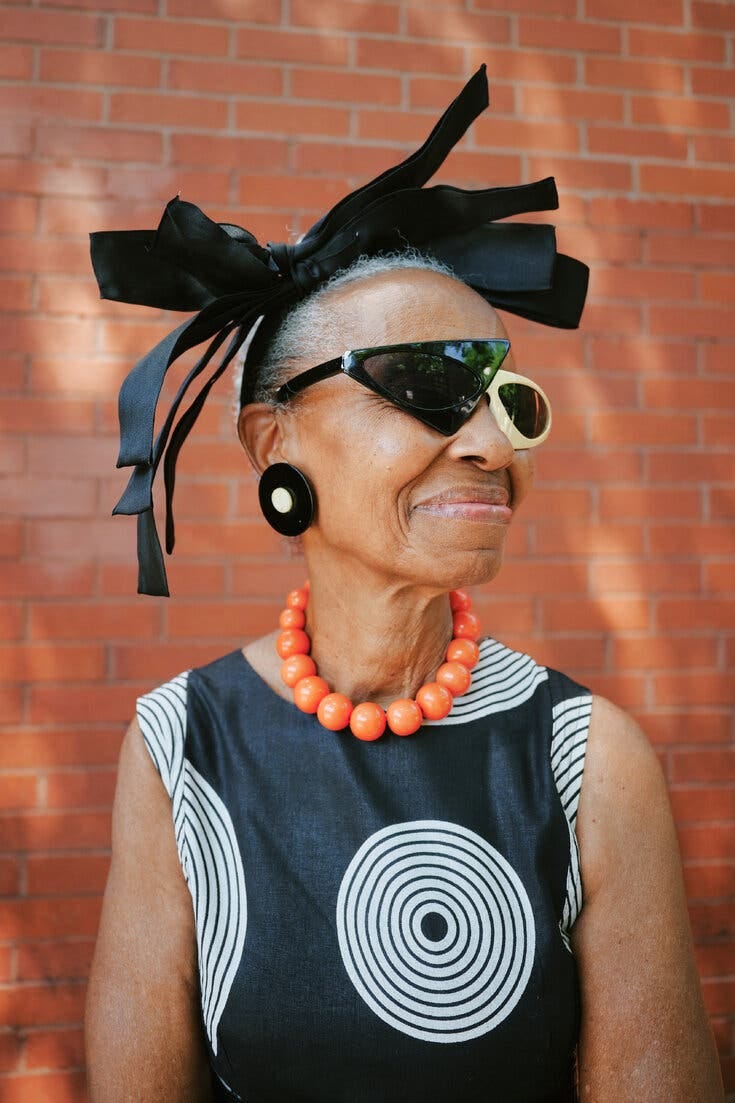
Asked when she began wearing full African looks, Omaghomi, who was born in Lagos, Nigeria, said that after the death of her mother, in 2021, she made a concerted effort to “always look my best, if I could.” She also pointed to a 2022 trip during which she accompanied the king to Rwanda. “I felt more comfortable,” she said of her decision to wear African designers on the visit. “We were going to Africa, and that was a huge turning point for me. But really, I think it was trying to be closer to my mom.”