

This newsletter will be on break throughot August and will return on 5th September. As always, stay out of trouble while BTH is away and do not do anything that might cause you to feature in the next edition.
This week, Tobi wrote a piece on the theme of extraction in Nigeria and how it applies to regulation in general.
Enjoy the week’s selection below and see you soon.
Nigerian Media
Following the recent high profile killing of a popular NURTW boss, Punch has a list of NURTW bosses killed in Lagos in recent times:
The killing of the Organising Secretary of the Lagos State chapter of the National Union of Road Transport Workers, Toba Ajiboye, popularly known as Toba Ijaya, has again drawn attention to the recurring cycle of violence that has claimed the lives of several influential transport union figures in Lagos over the years.
Ajiboye died after succumbing to gunshot injuries sustained when unidentified gunmen attacked his vehicle in the Fadeyi area of Lagos on Sunday. His burial on Tuesday attracted family members, political associates, transport workers and sympathisers.
His death adds to a growing list of high-profile killings involving leaders and members of the transport union, many of which were linked to political rivalry, leadership tussles, motor park supremacy battles and gang violence.
[…]
In April 2015, Oshodi transport union leader Olayemi Eniola, popularly known as Esi Oluwo or Baba Esi, died after sustaining fatal injuries during a violent clash linked to political activities in Oshodi.
According to The Guardian Nigeria, supporters alleged he was attacked by rival transport union members after an All Progressives Congress campaign rally, although no court established responsibility for his death.
His killing sparked widespread tension in Oshodi and renewed concerns over violence associated with transport union politics.
Female vigilantes in Plateau:
Worried by the persistent insecurity bedevilling communities like Bible Faith, Rafinfa and Laranto, some women joined the fight against criminal activities and social vices across Jos, the Plateau State capital. These fighters are known as the female vigilantes of Plateau State.
The group, comprising both Christians and Muslims, came together to contribute its quota to peace building in the community, saying the initiative became necessary to tackle violence, theft, drug abuse, prostitution and other crimes threatening peace and security in their neighbourhoods. They also noted that early intervention was key to preventing disputes from escalating.
Some of the female vigilantes, who said they were only equipped with canes and sticks, and without pay, patrol the community to ensure peace and harmony, as well as uphold moral standards among residents and visitors. They narrated their experiences to Weekend Trust.
One of the vigilantes, Hamma Usman, an indigene of Rafinfa said, “During operations, some people call us names, insisting that what we do is not a job for women. But for us, it is about maintaining peace in the communities.”
Hamma said she had witnessed every major crisis that happened in Jos and didn’t wish that anyone would experience the situation.
“At my age, I have witnessed all the crises that have occurred in Jos and realised that no one has benefitted from them. That’s why Christian and Muslim women came together to form this group to fight social vices. We are working together as one.
“No one has gained from the crises. Our children are growing and seeing all these. We cannot continue to face these challenges without doing anything. That’s why we created this group to unite Christian and Muslim communities and fight the crimes bedevilling our areas,” she said.
Narrating how they operate, she said they would patrol with men during the day but return home at night because they have children to care for, striking a balance between housework and security service.
Fake university and ponzi scheme rolled into one, the worst combination possible:
The Nigeria Security and Civil Defence Corps (NSCDC), Lagos State Command, has rescued 125 victims and arrested 18 suspects during a series of intelligence-led operations targeting a fake university, Ponzi scheme operators, human traffickers, school vandals and cross-border crime syndicates in Badagry.
The operations, carried out between July 14 and July 20, followed credible intelligence gathered through community engagement with stakeholders in the Badagry axis, leading to coordinated raids in Imeke, Itoga and Ibereko communities.
According to the command, the victims comprised 107 Nigerians and 18 foreign nationals, while those arrested are being investigated for offences ranging from operating an illegal tertiary institution and investment fraud to human trafficking, illegal migration and vandalism of public infrastructure.
One of the major breakthroughs came on Monday, July 20, when NSCDC operatives raided a fake university in Imeke, Olorunda Local Council Development Area, suspected of offering illegal admissions and unaccredited programmes, including nursing.
Six male suspects, aged between 24 and 31, were arrested during the operation.
Investigators discovered that 107 unsuspecting Nigerians who enrolled in the institution were allegedly lured into a Ponzi scheme after gaining admission.
Many years ago, in the first iteration of this newsletter, I made a habit of trolling Kubwa almost everyday. I see that despite my ceasefire to allow them get their act together, things have yet to improve there:
An Upper Area Court in Kubwa, Abuja, Federal Capital Territory (FCT), has dissolved a 10-year-old marriage between a woman, Rukaya Shuaibu and her husband, Shehu Zubair for lack of love.
The judge, Mohammed Wakili dissolved their marriage according to Islamic Law, following Rukaya’s prayer for divorce on the ground that their marriage lacked love.
Wakili ordered Rukaya to observe “Iddah,” which is a three-month waiting period before contracting another marriage.
According to the News Agency of Nigeria (NAN), Rukaya had earlier told the court that she got married to the respondent under the Islamic Law, and that she was yet to have a child for him.
She said that their marriage had broken down irretrievably, saying, “I pray the court to grant my request for divorce due to lack of love.”
“The respondent owes me N100,000, which I want him to pay back,” she said.
Responding, Zubair asked the court to grant Rukayat’s request, saying, “I once divorced her in June, 2023. I consent to her request before the court.”
“I borrowed the money she mentioned on behalf of a friend for his business, which unfortunately went bankrupt.
“She is aware that I have been pestering my friend to pay back,” he said.
Snake bites are such remain a deadly problem in Nigeria and the bottlenecks to producing anti-venom are a big part of the problem:
Two residents of Lissam Sambo (Pangtso) community in Ussa local government council of Taraba State have died from snakebites within 24 hours, raising fresh concerns over the lack of access to life saving medical treatment in the remote border settlement.
One of the victims, Elder Bako Awanki, reportedly died on the evening of July 23, 2026, after sustaining a snakebite. A second resident, who was bitten in a separate incident at a different location, also died later that night.Lissam Sambo (Pangtso), a remote community bordering the Republic of Cameroon, has no nearby healthcare facility equipped with anti-snake venom.
As a result, both victims reportedly relied on traditional treatment because appropriate medical care was not immediately available.
The delay in accessing effective treatment was believed to have contributed to their untimely deaths.
Reacting to the incidents, the Chairman of the Lissam Sambo (Pangtso) Community Development Association, Danladi Bewa, described the deaths as heartbreaking and lamented the recurring loss of lives to snakebites in the community.
“Several residents have died under similar circumstances because anti snake venom is unavailable in the area, while the nearest health facilities capable of managing snakebite emergencies are located far from the community,” Bewa said.
He appealed to the council chairman, Mr. Abershi Musa, to urgently provide anti-snake venom to the community to prevent further avoidable deaths.
Bewa also called on the Taraba State Commissioner for Health to intervene by ensuring that life-saving anti-snake venom is made available in Lissam Sambo (Pangtso).
Fake doctor selling fake jobs. But when are we going to have a conversation about people who pay for these jobs and only report the matter when they get scammed? Not today? Oh ok:
A 39-year-old man, Udeme Emmanuel Ekpeme, has been arrested by the Cross River State Police Command for allegedly posing as a medical doctor and swindling a woman of Five Hundred Thousand Naira with a promise of securing hospital jobs for her children.
The suspect was picked up by operatives attached to the Uwanse Division in Calabar South LGA following a petition by Mrs. Edemawan Samuel, 45, who accused him of parading himself as a doctor and taking the money from her under the pretext of helping her children gain employment at the University of Calabar Teaching Hospital (UCTH).
Police say preliminary findings show the suspect exploited his false identity to gain the complainant’s trust before defrauding her.
Exhibits linked to the case have since been recovered, and he remains in custody as investigations continue.
Confirming the arrest, the Police Public Relations Officer, ASP Sunday Eitokpah , said the Commissioner of Polucee had ordered a full-scale investigation into the matter.
“The Commissioner of Police has directed that this case be thoroughly investigated to establish the true circumstances surrounding it and to determine whether there are other victims,
“The suspect will be charged to court as soon as sufficient evidence is established,” Eitokpah said.
He added that detectives were widening the probe to unravel the suspect’s full activities.
Non-Nigerian Media
Chidimma Adetshina is back in the news in South Africa:
Now, the 25-year-old is facing deportation from her country of birth over accusations that she entered it illegally from Mozambique earlier this year. Adetshina, who was arrested last month in Cape Town, is contesting the legal process for her detention and deportation.
She is also expected to file an affidavit detailing steps she has taken to try to resolve her immigration status. In a social media post this week, she vowed to keep fighting the case.
“Exhausted — yes, burnt out — yes, depressed — yes, will I give up, no!” she wrote on Instagram, adding “see you next month”, in reference to her next court date.
Having entered the Miss South Africa pageant in 2024, Adetshina had her passport and national ID revoked after failing to respond in time to government requests to justify her documents. Her Mozambican mother was accused of committing identity fraud and assuming the name of an “innocent South African mother” around the time of her birth.
Later that year she obtained a Nigerian passport, having inherited citizenship through her father.
Adetshina has been in court as South Africa is gripped by xenophobic violence and anti-immigrant sentiment. A “deadline” of June 30 given by protest groups for all illegal migrants to leave the country has resulted in tens of thousands of Nigerians, Malawians and other Africans being deported, supposedly voluntarily but often fleeing violent mob threats.
Since the deadline has passed, those groups have committed to weekly demonstrations until local elections in November to put pressure on the government to remove illegal migrants and secure the border.
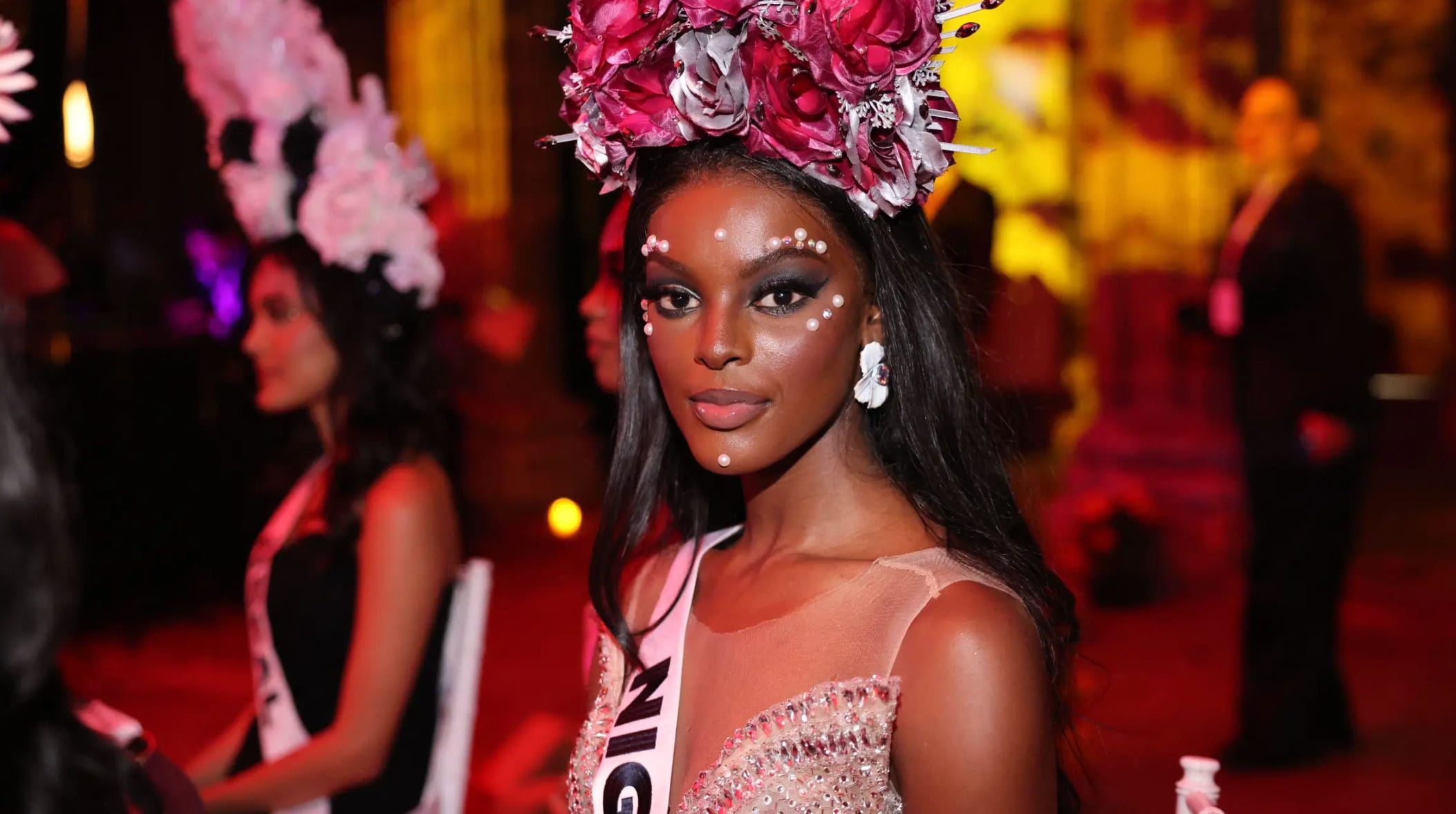
And staying with South Africa, a feature on the woman who is leading the anti-immigrant crusade:
On a clear morning last October, Nozie Khoza and her brigade of self-proclaimed patriots stood at the entrance of a public health clinic in Johannesburg on a quest to shape South Africa in their image.
When the gate opened at 7:30, the group demanded to see IDs from everyone seeking to enter, saying that only South Africans would be allowed inside.
“You belong to Nigeria, sweetheart,” Bongi Nomnganga, one of Ms. Khoza’s allies, told a young woman, turning her away because, even though she had a South African ID, her last name was Nigerian.
“It smells like fraud,” another one of Ms. Khoza’s associates said of a young woman’s South African ID, after the woman told them her parents were from Mozambique.
Ms. Khoza, a 39-year-old mother of two, had no authority to determine who could enter the public clinic.
Rather, she is a foot soldier in a highly organized network of activists going to extreme lengths to harass immigrants in South Africa, most of whom come from other African nations in search of opportunity in the continent’s largest economy.
Who can afford to go to the beach in Lagos these days?
Weekends for Mukthar Oladunmade since he was a child have typically featured a visit to the beach. In the ceaselessly bustling city of Lagos, he prefers to unwind on the breezy Atlantic shoreline that nearly surrounds the city.
But these days, going to the beach in Nigeria’s commercial hub has become expensive. It now involves a virtual spreadsheet of expenses, including fees for entry, chairs, food, drinks and activities as the local government hands over more of the shore to private developers.
“It costs a lot of money for the average Nigerian to come here,” Oladunmade, a 27-year-old writer, said at Takwa Bay, one of the few islands that are not privately owned.
He travels regularly across West Africa for work, and his favorite evening pastime is relaxing at the beach, whether in Accra, Cotonou, Dakar or elsewhere in the region. He says it’s only in Lagos where that has become nearly impossible.
“On average, I spend 25,000 naira ($18) whenever I think of coming to the beach,” he said.
That´s beyond many residents of Lagos, where the majority of people work in the informal sector. Nigeria´s minimum wage is 77,000 naira ($56) per month.
The beach is one of the few public spaces in the city of over 20 million residents to escape the crowds and Lagos´ often sweltering heat. The city is near the equator, with humidity averaging 80% year round.
But most of the city’s 180-kilometer-long coastline is being privatized by the government or by families with ancestral claim to the land. The Lagos state government also has reclaimed land for exclusive residences and developments including a causeway and deep sea port.
What used to be free public spaces are mostly now ticketed ones, with entry fees ranging from 2,000 ($1.50) to 60,000 naira ($44), as the state government has licensed them to individuals or businesses.
A surging economy has grown around the beaches, where items are priced steeply under private owners.
“They are only making money half of the year, having put a lot of money in it,” said Doyin Ogunye, who runs drinks and food businesses at beaches. “So the entry to the beach, the food and drinks will be more expensive.”
The sextortion case that led to a teen killing himself is still making its way through the courts:
A Nigerian man who helped launder money in the twisted online extortion of a Montgomery County college student — a plot that led the 20-year-old to kill himself by walking in front of a train — was sentenced Friday to five years in federal prison.
Afeez Olatunji Adewale, 27, was one of two men who helped collect money and mask its source while a third man orchestrated the tormenting of Abington native Jack Sullivan, prosecutors said.
The scheme took place on social media in 2023, when one of the co-defendants, Imoleayo Samuel Aina, began communicating with Sullivan using fake social media accounts under the moniker “Alice Dave.” Aina, posing as the woman, convinced Sullivan, a student at Kutztown University, to share intimate photos of himself, and then demanded money to keep the images private.
Sullivan ultimately turned over more than $3,000, prosecutors said, and Adewale helped try to hide the source of those funds, including by having money sent to what they called “compromised American banking accounts” as well as accounts in Nigerian banks.
But on Jan. 4, 2023, only about 18 hours after Aina had begun messaging Sullivan, the harassment reached a tragic end.
Aina reached out to Sullivan to demand more money, prosecutors said, but Sullivan sent a message back saying: “I don’t think I have enough for it.”
Three minutes later, prosecutors said, he walked onto the tracks near the Jenkintown SEPTA station, where he was struck and killed by a passing train.
Tolu Arokodare has invented a new method of forcing a club to sell you to who you want:
Wolves striker Tolu Arokodare forced the cancellation of a training session after he refused to leave the pitch.
Wolves have rejected a bid from Fiorentina for the forward, having accepted an offer from Turkish club Trabzonspor.
While Arokodare has denied that he refused to train, sources have said that he allegedly inserted himself into a training session which he was not due to be involved in.
The striker was not involved in Wednesday’s friendly at Maidenhead United as Wolves continued their pre-season plans.
On social media on Wednesday evening, Arokodare wrote: “Throughout my career, I have always taken great pride in conducting myself professionally and maintaining the highest training standards.
“My commitment has always been to prepare myself as well as possible so that I can contribute to my team-mates and the club whenever I am called upon.
“I remain under contract with Wolves, and my only intention is to fulfil my responsibilities professionally by training, doing my job, and contributing to the team in accordance with that contract.”
The latest incident is another flashpoint in the forward’s career at Molineux after he was disciplined in April following a confrontation with young forward Mateus Mane.
Arokodare signed for £24m from Genk last summer but scored just three league goals as Wolves finished bottom of the Premier League and were relegated.
New elephant just dropped:
A new elephant calf has joined a closely watched family, marking a major milestone for Arden, one of the elephants tracked through Fahlo animal-tracking bracelets: her daughter has given birth to a female calf, making Arden a first-time grandmother.
The conservation update also came with a regal new name. Arden’s daughter, a first-time mother, has been named Haidzatu after Hajiya Haidzatu Ahmed, Queen of Kumbwada in Nigeria, who is known for championing women’s education and opposing domestic violence.
Nice feature on Nigeria’s burgeoning animation industry:
From the mid-1990s to late-2010s, Nigerian animation was in its pioneering years. While the competitive commercial ecosystem did not fully exist, a small number of studios working across advertising and broadcasting created animations for educational programmes, children’s shows, news introductions and product adverts aired by the Nigeria Television Authority. For children like myself who grew up during that era, these animations became part of our visual and sonic memory. They arrived with melodic intro soundtracks, often recited in moments of solitude or while playing with our friends. TV programmes such as Unicef’s 1996 animated film Sara’s Choice, alongside the animated opening sequence of NTA’s A.M. Express, which began airing in 2002, became defining moments of this period.
There were also animated adverts in the early 2000s, many of which leaned more heavily on stop-motion techniques and early digital graphics. Among the era’s most memorable campaigns were the Shaky Shaky Daddy advert, the Baba Blue throat drop commercials and the hauntingly beautiful Fumman fruit juice ads, in which anthropomorphic oranges sang melancholic tunes about being picked.
The next wave arrived in the 2010s, when internet culture and platforms like YouTube and Facebook brought animation to a wider audience. Unlike broadcasting, this generation was more driven by independent creators, with comedy becoming one of its core forms. Leading this movement was House of Ajebo.
Erem Emeka Nehemiah started House of Ajebo while in his sophomore year in university, driven by a desire to create something unique that didn’t exist in the Nigerian entertainment industry. Before animation, he was a comedian who had spent years building his craft – something he credits fully to the support of his parents, who encouraged him to express himself from a young age. The characters he built were those that Nigerians could instantly relate to. His breakout character, Tegwolo, embodied the humour, chaos and confidence of the everyday Nigerian child, particularly the mischievous schoolboy archetype familiar across many African homes. Today, the characters he created have amassed more than a billion views across digital platforms, while House of Ajebo has grown into one of Africa’s most recognisable animation studios, with nearly four million followers and subscribers.
Is there any scenario in which this Maduka Okoye story ends well?
Maduka Okoye‘s baby mama just went scorched earth on the Nigerian soccer star in a brutal Instagram rant.
Dutch model Jelicia Westhoff made explosive allegations about the goalie ... accusing him of abuse -- and neglecting their young child because he’s too busy getting laid with women and men!
Westhoff went off on Maduka around the time he was snapped hanging with Cardi B in Italy ... they were also seen hanging out during Paris Fashion Week.
It’s not clear if the Cardi snaps triggered Westhoff ... but she had daggers for Maduka, saying ... “I made you! No one knew who you was. And instead of loving us, you beat me, cheated on me with men and women. You’re a f****** demon who tried to destroy my life.”
Westhoff added there’s nothing wrong with being bi ... she’s more upset that he’s allegedly been MIA in their child’s life while he’s out partying.
News from Pennsylvania:
The United States Attorney’s Office for the Middle District of Pennsylvania announced that Okeoghene Patrick Udugba, age 45, of Frisco, Texas, was indicted by a federal grand jury on charges of Money Laundering and Conspiracy to Commit Wire Fraud and Mail Fraud.
According to United States Attorney Brian D. Miller, the indictment alleges that Udugba and others orchestrated overlapping romance and business email compromise schemes. As part of the scheme, Udugba and others utilized social media and dating websites to meet and establish purported romantic relationships with persons in multiple states. Those persons were groomed and ultimately used by Udugba and others as money mules to receive and cash fraudulently obtained checks.
To obtain the checks, members of the conspiracy sent emails from “spoofed” addresses in Nigeria, claiming to be representatives of the United States Fish and Wildlife Service (FWS). The spoofed emails directed that FWS grant funds be used to pay fabricated invoices, which falsely represented that the money mules were contractors and consultants of FWS who had performed work on grant-eligible projects. As a result of the fraudulent emails and invoices, FWS’s grant administrator issued payments in excess of $300,000.
United States Attorney’s Office
👏👏