

We continued our read-along of How Africa Works with chapters 7 and 8. The final entry will be out on Monday. Our podcast with Dan Wang came out on Wednesday.

Enjoy the week’s selection below
Nigerian Media
Remember that disease that ravaged Nigeria’s ginger crop? It has done a crazy number on prices as expected:
Our correspondent gathered from various major markets across the North that a bag of dried ginger, which used to sell at N180, 000, now costs N600,000 to N610,000. Three years ago, a measure (mudu) was sold at N2, 700, but today, it costs N28,000.
However, the price of ginger varies based on the type and its purity, in terms of dust and other unwanted particles. Although some people prefer fresh ginger, most users and exporters depend on the dried type.
Alhaji Isah Garba, a major player in the Yankaba spice market and a ginger farmer in Kaduna State for decades, said the surge in ginger price was due to increased global demand.
He also said the discovery of numerous health benefits associated with ginger was another factor contributing to the commodity’s price increase.
Garba explained that pest infestation, which started in 2023, significantly reduced ginger production, resulting in a severe scarcity of the commodity in Nigerian markets.
Baby price watch:
The Police Command in Lagos State has arrested a 30-year-old man who allegedly sold his sister’s one-month-old baby for N2 million.
The News Agency of Nigeria reports that the suspect, a resident of Igbogbo in the Ikorodu area of the state, claimed that he sold his younger sister’s baby to fund their mother’s burial.
The mother of the baby reported the incident to the police leading to the arrest of the suspect.
The Commissioner of Police in the state, Mr Olohundare Jimoh, has ordered the transfer of the case to the State Criminal Investigation Department (SCID), Panti, for further investigation.
Speaking with NAN on Friday in Lagos, the suspect who confessed to the act, blamed poverty for his actions.
The suspect claimed that he met the woman who bought the baby on Facebook.
“Hardship pushed me to commit the act. My sister agreed to the idea.
“I met the woman who is in need of a child on Facebook, and after negotiations, she asked me to bring the baby to Mile 2.
A very sad story of nominative determinism:
A 56-year-old civil servant, Mrs Cordellia Onuwabagbe, yesterday narrated before a Lagos High Court sitting in Igbosere how a romantic relationship between her daughter and Benjamin Best Nnanyereugo, popularly known as Killaboi, allegedly ended in the death of the young woman.
Nnanyereugo is standing trial before Justice Ibironke Harrison over the alleged murder of Miss Augusta Oseodion Onuwabagbe.
Testifying as a prosecution witness, Onuwabagbe told the court that she first met the defendant in 2021 after her daughter introduced him as her boyfriend. According to her, Augusta had sent her a message on December 1, 2021, informing her that she was in a relationship with him.
“As a single mother trying to be safe, I asked her to bring him home. She brought him on December 8, 2021,” she said.
She added that she accepted him as part of the family after meeting him. “I saw him, and my daughter said she loved him. I accepted him as a son. He used to come to the house often. We would talk and sometimes eat together,” she said.
Onuwabagbe told the court that her daughter was a 400-level student of Medical Laboratory Science at Lead City University and was on course for a first-class degree.
According to her, the relationship later showed troubling signs. She recalled that on November 22, 2022, Augusta and the defendant travelled abroad for a holiday. She said she had questioned him about the source of the funds for the trip, to which he claimed he won a sports bet.
However, about a week into the trip, she received a disturbing video from the defendant. In the video, Augusta appeared angry following an alleged quarrel between the couple.
“He did not record the part where he beat her. My daughter later told me he abused her, smashed her phone, pulled her hair and beat her,” she said.
“But when she became angry and threw pillows at him, he recorded that part and sent it to me.”
A story from Ilorin. See if you can count the number of failures that led to this tragedy:
Details emerged on Monday on how a man died in a fire incident which occurred at Lafia Hotel, in Ilorin, last Thursday.
The fire outbreak occurred at about 23:38 hours at the hotel along Coca-Cola road in the state capital, in an apartment used for short-let purposes.
The unidentified man was burnt beyond recognition according to graphic pictures on the incident.
Details of the incident indicated that the man allegedly lodged in the room of one of the female occupants engaged in commercial sex to probably pass the night.
Findings by DAILY POST revealed that before the fire outbreak, the lady who went out to buy some items, locked the man inside the room as it was against the rules of the hotel management for women to keep men overnight in the facility.
Operatives of the Department of State Services, DSS, have commenced investigation into the incident, as all the sex workers have deserted the facility.
The fire incident which was reportedly triggered by power surge involved a building comprising two flats with three bedrooms each, all of which were affected by the fire.
Really don’t want to sound harsh but why are you patronising a ‘cleric’ for a passport?
A wave of indignation has swept through the Nigerian diaspora in the United States following allegations that a Texas-based man, identified simply as “KO”, has defrauded numerous citizens of thousands of dollars under the guise of a Nigerian passport intervention exercise.
The suspect, who presents himself as a clergyman and “Prophet of the Most High God,” reportedly operates under the company name Global Tours and Partyride LLC through which he runs what he calls a “Passport Intervention Program”. The phone number on a flyer advertising his services – +1(682) 717-3360 did not connect as of the time of filing this report. He did not also respond to a message sent to his Facebook Messenger. Interior Ministry officials in Nigetia said they were analyzing the complaints and actively looking into the case.
‘Not one of us’
The Nigeria Immigration Service NIS has however denounced activities of the said cleric, saying he is neither their personnel nor vendor.
A senior official of the Service who spoke to Saturday Vanguard but begged that his name should not be mentioned because his brief does not include speaking to the Press, said the fraudster was being tracked.
He however admitted the difficulty in tracking him for now because he has discarded his known telephone line and vacated the address he gave to his victims.
The official also blamed the development on the usual attitude of many Nigerians to seek “quick fixes” even in situations where government has provided a seamless, legal route for certain services.
“Most of our processes are digitized. Payments can be made online after filling the necessary forms online.
“People have been using this option including Nigerians resident in Nigeria. It is a simple, do it yourself process. You just visit our website and follow the necessary prompts.”, he said.
Same energy:
Seventy-five Nigerians are counting their losses after being scammed out of over N100 million by fake visa agents, promising them Canadian visas. The victims, desperate for a better life, sold their assets, rented out apartments, and even borrowed money to meet the N3 million to N12 million demanded by the scammers.
One of the victims simply identified as Mr. Promise, allegedly paid N11 million and resigned from his job, only to realize that it was a scam. He’s not alone; many have been left with nothing, and refunds seem unlikely.
Mr. Promise sold his available property and also convinced his younger brother to “utilize this golden opportunity” to relocate to Canada. A source close to him said, besides losing his job, “the man is in a dire strait as he cannot afford his children’s school fees and he is also very sick as a result of the loss of his money. He shuttles between Port Harcourt and his village just to make ends meet”.
At the center of it all is Dr Nekebari Nathan Dambere, a self- acclaimed travel trainer, a medical doctor who was arraigned by the Economic and Financial Crime Commission, EFCC, over an alleged N39.1million visa scam in Port Harcourt.
When contacted, Dambere admitted that he is not a travel agent but a travel trainer. He said, “sometimes people pay money through me to the middlemen some of who are in Nigeria while others are outside the country”. He owned up to the fact that money paid through him so far “is about N100million”, adding that the agents involved are “talking of paying back the money in percentage”. He appealed that both the EFCC and the Nigeria police are working hard to ensure that the money is collected from the agents and paid back to the owners. He didn’t give a specific time frame for the refund.
Non-Nigerian Media
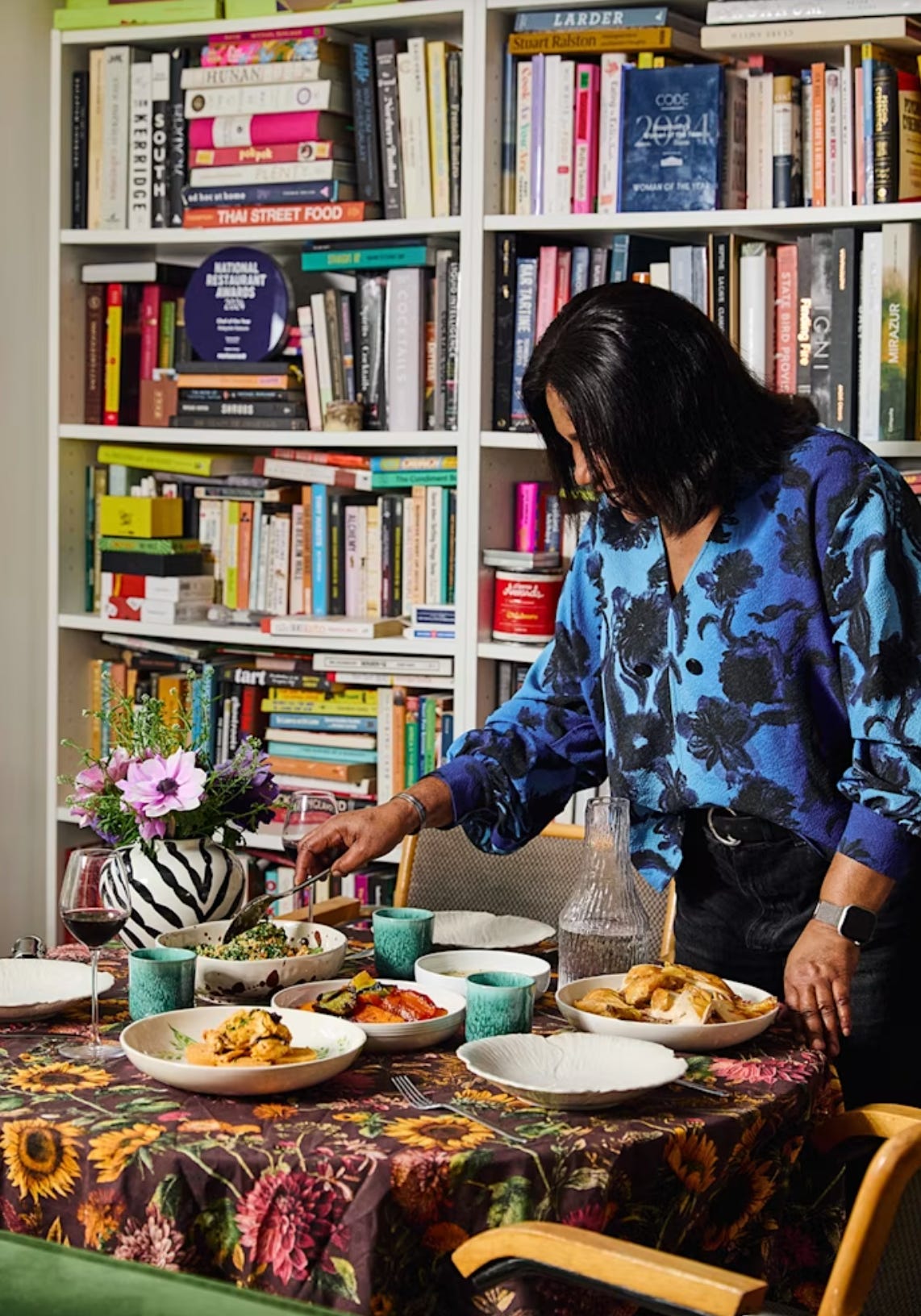
As you must know by now, this letter is a fan of Joke Bakare and Chishuru. Here she is hosting a West African dinner for friends at her home. Warning, the article may leave you seriously hungry (gift link below):
The funny thing about my approach to hosting is that when I have my Nigerian friends over, I don’t often make Nigerian food, I’ll usually make something else. So the people I’ve usually invited for a traditional west African meal aren’t always as familiar with the food, and they’re often surprised, not having realised it can be this nuanced and layered.
The typical representation of west African food tends to be that it’s mainly one-pot dishes. This couldn’t be further from the truth. There aren’t courses as such, but there are distinct elements; the food is far more elevated and complex than people sometimes give it credit for.
That’s true of the dishes specifically, but also more broadly speaking in the foodways. I’m Nigerian, but I always say my cooking and restaurant are west African. Moi moi is a Nigerian dish, but you’ll find similar steamed bean puddings across other west African countries. Mburu fass is a Senegalese dessert, yet there’s a variation of it made in northern Nigeria, where I grew up. Different countries have their own interpretations of the same foods.
I don’t get to host dinners at home as often as I once did, so I really enjoy when I get the chance to welcome people into my home. The most important thing for me is that everyone has a good time and that they’re fed and watered.
You may have heard there’s a war going on in the Middle East:
A tanker carrying liquefied-natural gas to Europe has changed course, according to data platform Kpler, an early indication that a bidding war for energy between Asian and European buyers is underway.
The BW Brussels, carrying 71 kilotonnes of LNG from Nigeria, was signaling France as its destination but U-turned on Tuesday. The vessel is now heading toward the Cape of Good Hope at the southern tip of Africa, according to Kpler, suggesting it is on route to Asia.
Ships are increasingly diverting around Africa to avoid the Suez Canal.
Nine women talk to The Times about their approach to leadership. One of them is 31 year old Eva Chisom Chukwunelo from Abuja:
How She Leads: An amputee who has used a prosthetic leg since 2013, after having osteomyelitis, a bone infection, Ms. Chukwunelo is a disability advocate who speaks globally about disability inclusion and feminism. She is also the founder of The Body as Canvas, an initiative that stages art exhibitions celebrating disabled bodies and the stories behind them.
What has been hardest about bringing lived experience and storytelling into policy conversations?
In Nigeria, where disability is often discussed at a distance from the lived realities of disabled people, the obstacle is that stories are welcomed for inspiration but resisted when they challenge power, funding priorities or existing systems.
As a woman with a disability, I have spoken in cultural, advocacy and leadership spaces about navigating inaccessible environments, exclusion from creative and professional opportunities and the cost of visibility as a disabled woman. In many of these rooms, my story is received with admiration. The response is often emotional and affirming, but it stops there. What rarely follows is structural action: no reconsideration of access, no shift in programming, no reallocation of resources. It shows how systems fail in real life.
Feature on raves in Lagos rewriting the rules of nightlife. This is a topic we discussed on our podcast with Odun Eweniyi last year (LINK):
On a recent Friday night, thousands of mostly young people trooped into a large auditorium in Lekki, an upscale part of Lagos.
Inside, it was hard to discern the faces of people just meters away. The whole hall was dark, lit only by flashing green strobe lights from the stage. Those gathered had come together for therapy.
But this was Group Therapy, a popular rave in Lagos, where revelers come seeking a different party scene they wouldn’t find anywhere in Nigeria’s commercial heart of Lagos.
Lagos’ nightlife scene had, for decades, been dominated by table culture, a club experience that prioritizes how much people spend on drinks and prime seating. The party environment encourages a competitive atmosphere that young people who live in Nigeria, Africa’s most populous country, say has shut them out amid skyrocketing inflation.
At Group Therapy, there are no tables. Revelers in Lekki danced shoulder to shoulder. There was only one small bar, selling drinks for much less than the typical Lagos nightclub.
“At raves, the dance floor is present. You go to a usual Lagos party, and there is no dance floor,” DJ Aniko, the founder of Group Therapy, told The Associated Press. “We barely have spaces to just dance, spaces you can just go to literally have a nice time. Most places you have to make a reservation, or book a table, it is a lot more complicated.”
Long time no Tems:
“I’m sorry, I don’t know why I’m like this today…” Tems confesses with an awkward giggle. What she’s referring to is the spirit of evangelism that seems to take over her during our call. Within minutes of getting on the phone, she’s instructed me not to truncate my name from ‘Solomon’ to ‘Sol’ because “if you have a king’s name, you mustn’t shorten it,” declared that the secret to happiness is submitting yourself to God, and stated that “Seek God first” is the best advice she’s ever been given. “I became Tems after that,” the 30-year-old Nigerian singer reflects.
Given that Tems’ warm and earthy vocal tones have captivated listeners around the world in the six years since her breakout feature on Wizkid’s “Essence” in 2020, these aren’t words to be taken lightly. Over the years, the alté pioneer has transformed from a self-described “quiet child” whose only dream was to be heard, to shattering records in every direction. With her feature on Future’s 2022 single “With U”, she became the first Nigerian artist to debut at number one on the Billboard 100, and in 2025 she became the first female African artist to accumulate over one billion streams. Most recently, she topped charts once more with Dave collab “Raindance”, presented at the Brits, and was named Hennessy’s latest brand ambassador. Whatever Tems is doing, it’s working.
Update on this story we covered here last year. Kindly note that I had nothing to do with this:
A drug dealer has admitted beating a vulnerable former chef to death after allegedly forcing him to sleep beside dogs.
The body of 55-year-old Dimitrios Tsavdaris was found in a foetal position inside a “cuckoo” flat in Hackney, north London, after he succumbed to weeks of violent attacks, the Old Bailey was previously told.
He had been taken there from the home of Bamidele Fawehinmi in Wickford, Essex, where he allegedly slept on a mattress in a garage beside American pitbull cross-breed dogs.
Weighing just over eight stone, the victim was a frail “vulnerable person” who may have been dead or dying for several days before his body was found on January 29 2024, jurors heard.
He had suffered multiple fractures to his ribs, face and breastbone as well as old and new bleeding on the brain and internal injuries.
On Thursday, partway through his retrial at the Old Bailey, Fawehinmi, 33, from Haringey, north London, pleaded guilty to manslaughter and causing grievous bodily harm.
Judge Mark Lucraft KC discharged the jury from returning a verdict on a third charge of servitude.
He was remanded into custody to be sentenced on May 8.
Detective Superintendent Kelly Allen, who led the Met’s investigation, said: “I cannot imagine the pain and suffering Dimitrios must have gone through in the final weeks of his life, enslaved by Bamidele Fawehinmi and living in fear for his life.
“Dimitrios was a frail man who did not pose a threat to Fawehinmi. His initial claim in police interview that he acted in self-defence is utterly preposterous, and the words of a coward.
“Fawehinmi is a violent bully, who preyed on vulnerable people to exploit them for his own gain. His conviction will not erase the pain felt by Dimitrios’s family but I hope the fact he will spend a significant period of time behind bars brings them some small sense of justice.”
Kano’s female keke riders:
Sporting a pink knee-length veil, Umma Hani Yusuf Khalid has recently found financial stability as a rickshaw taxi driver, a trade that was unthinkable for her in Nigeria’s conservative Muslim city of Kano two years ago.
As more women are having to fend for themselves amid economic hardship, they are increasingly venturing into trades previously dominated by men.
Khalid’s pink three-wheeled electric rickshaw stood out on the frenetic streets of the region’s commercial hub, as she pulled over to pick up women passengers.
The 35-year-old divorced mother of two is one of 100 women rickshaw taxi drivers plying the city’s chaotic roads under Mata Zalla, a cooperative promoting women’s empowerment.
“As a female rickshaw operator, you need to be strong because you made the resolve to go through all kinds of challenges,” Khalid told AFP.