

Back in 2009, I was only a couple of years into my first job in the City of London, working for JPMorgan, which I had only just managed to keep in the turmoil of that period. The financial crisis had swept away thousands of jobs across the industry with Lehman Brothers going bankrupt and several of my friends becoming unemployed overnight and Bear Stearns having to be rescued by my own employer. In March of that year, the insurer Prudential announced that its chief financial officer, Tidjane Thiam, would become its next chief executive to take over on 1 October, something that would make him the first black CEO of a FTSE 100 company. For me at the time, a little over five years into living in Britain, this felt momentous.
Just five months after starting as CEO, on 1 March 2010, Thiam announced a $35.5 billion bid for AIA, the Asian life insurance business of AIG, the stricken American insurer bailed out by the US government in 2008. The City of London was still living with the consequences of enormous deals from the go-go era of a few years before symbolised by RBS’s disastrous 2007 acquisition of ABN AMRO, a deal that a later RBS chairman described as “the wrong price, the wrong way to pay, at the wrong time and the wrong deal.” Yet here was a newly appointed chief executive attempting a large and risky transformation of his own seemingly oblivious to all of that. The financing plans included a £14.5 billion rights issue, asking shareholders to supply fresh money on an extraordinary scale: Prudential’s market capitalisation at the end of February 2010 was approximately £15.2 billion, for context. The prospectus ran to nearly a thousand pages (skips had to be hired to take them away from Prudential’s offices after the deal failed.) Prudential had averaged about 27,400 employees worldwide in 2009. AIA’s operations outside India alone would bring another 15,500 employees and more than 160,000 sales agents. I followed the coverage with a mixture of admiration and apprehension. Had this black guy overdone it?
And this was the Pru we were talking about. Founded in London in 1848, it had become part of British family life through the agents who called at people’s homes to sell insurance and collect small premiums. The ‘Man from the Pru’ was a familiar visitor to working-class households, helping them buy protection against the loss of a breadwinner. There was an echo of that history in the Asian agents selling insurance face to face as part of AIA’s model. Prudential already had a substantial Asian business but what Thiam was proposing was a dramatic acceleration of an existing direction. The bid eventually collapsed in June 2010 after Pru’s shareholders balked at the purchase price which prompted Thiam to seek a reduction to about $30.4 billion in a bid to salvage the deal. AIG refused the revised offer. After a drawn out investigation, in March 2013, the regulator publicly censured him over his failure to notify it of the proposed transaction early enough saying: “Mr Thiam was knowingly concerned in PAC’s failure to deal with the FSA in an open and co-operative manner”, an experience he personally found very bruising.
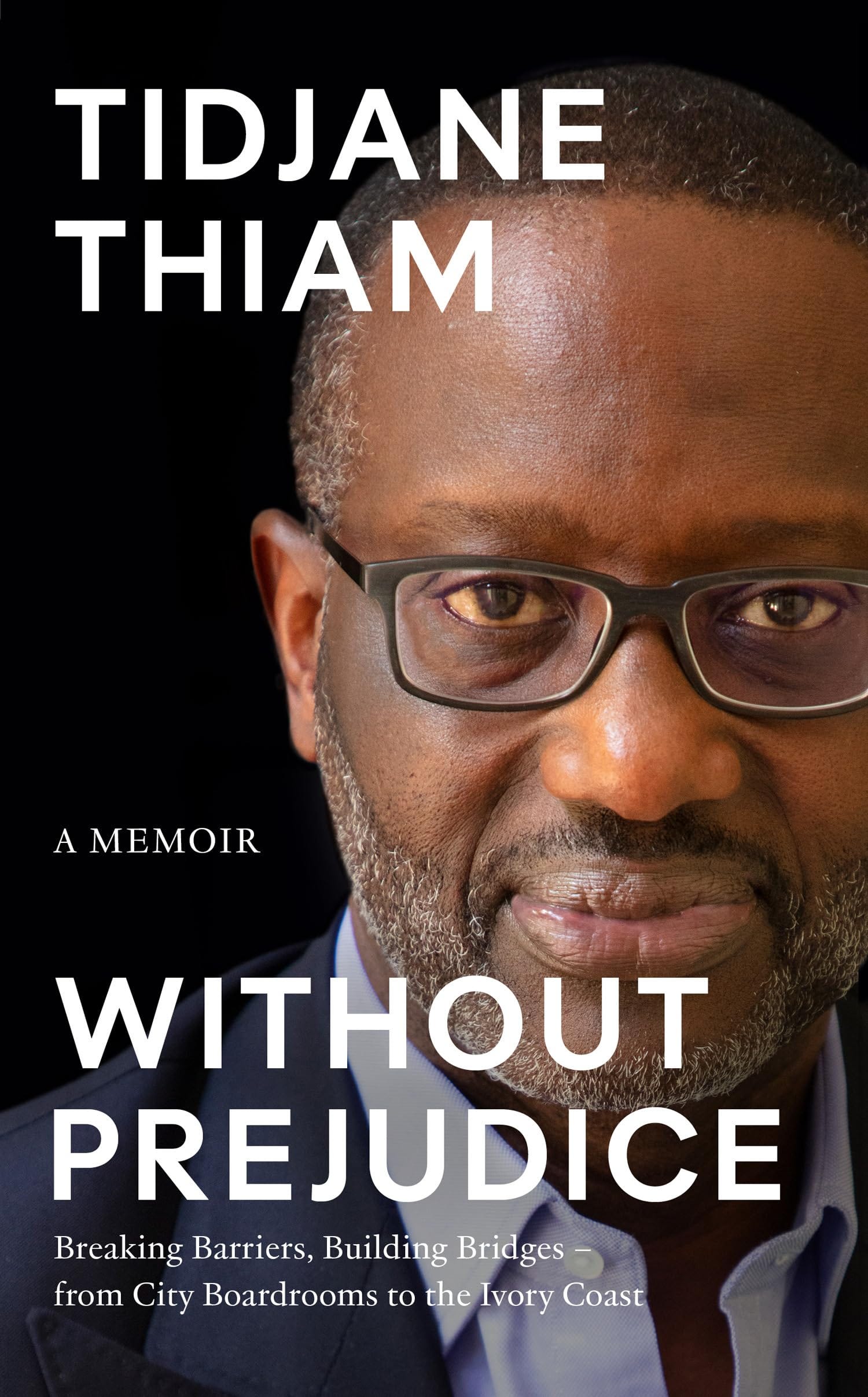
More than a decade later, working in insurance in a role focused almost entirely on Asia, I came to understand what might have attracted him to the AIA deal. In rising Asia, insurance meant something particular to families becoming prosperous for the first time in their history. They now had something serious to lose and wanted protection against the financial consequences of illness or death, the better to ensure the trapdoor of poverty beneath their feet stayed shut forever. I could now see why Thiam had wanted to move so quickly, even if that left open the question of whether AIA, at that price, was the right way to do it. I am reading his memoir, Without Prejudice, with a bit more sympathy for that ambition than I felt at the time.
What I remember reading and hearing about Thiam back then was that he was exceptionally bright. I of course knew he was Ivorian and that he had built his career in France, but I knew almost nothing of the family background I am now meeting in this book. Some of those connections were reported at the time but they had not really shaped my impression of him (The Guardian even laughably described him in 2010 as “not from the most privileged background”.) Looking back, I find something quietly encouraging in that. Britain seemed to have given him room to be known for his own abilities before anything else.
My Benefactor, My Persecutor
In 1963, three years after Côte d’Ivoire became independent, President Félix Houphouët-Boigny embarked on a power consolidation drive to get rid of anyone who might challenge his authority. The faux complots, as they came to be known, snared his former comrades in the independence struggle who suddenly found themselves accused of plotting against the very state they only just helped bring into existence. One of those who ended up in prison was Amadou Thiam, the information minister and Tidjane’s father. In his account, Tidjane presents Houphouët as a man deceived by the schemers who surrounded him even though the political outcome very conveniently led to a greater concentration of power in his hands.
Amadou had arrived from Senegal in the 1940s as a young man raised in Dagana on the Senegal river. His cousin Habib would become prime minister of Senegal while Amadou went on to build his career in Côte d’Ivoire. If that sounds unusual to today’s sensibilities, it is because Amadou had moved between what were then territories of French West Africa, before any of them was a sovereign country as we now know them. Territorial divisions were changeable with France, for instance, incorporating part of Upper Volta, now Burkina Faso, into Côte d’Ivoire in 1932, and then restoring the same Upper Volta as a separate colony in 1947. Geographical boundaries tended to move around people and Amadou’s migration preceded the national citizenship categories through which his descendants’ belonging would later be contested.
Amadou’s introduction to Abidjan, as Tidjane tells it, came when a white man demanded to know why he had not stepped off the pavement to let him pass. The argument led to Amadou being detained by the Police who explained to him the deference expected of black people there. This caused him to seek out the anti-colonial movement which set him on the path to becoming a prominent broadcaster and brought him into Houphouët’s orbit. By 1963 he had reached the cabinet and married Mariétou Sow, Houphouët’s favourite “niece”.
Amadou’s post-prison rehabilitation opportunity came in 1966 when Houphouët needed an ambassador to Morocco. He had planned to send his daughter and her fiancé, the rising official Ahoua Nguetta, and had already acquired a befitting residence for them in Rabat when she broke off the engagement. Amadou, “seen as deserving of charity”, was offered the posting and he “hungrily accepted the proposition”. Mariétou welcomed the chance to put some distance between her children and the presidential court. But Amadou still wanted his old ministerial job back and so the man who had refused to step off the pavement for a white stranger spent fifteen years waiting for the president who had locked him up to give him back his old job.
What might explain such loyalty and devotion? Amadou understood his imprisonment as a test of his faith and loyalty and was adamant that Houphouët had been misled. Reinstatement would thus vindicate his innocence and restore his lost standing. When the opportunity to return to the cabinet finally came in 1978, Tidjane writes, “I never saw him happier, either before that day or at any stage during the rest of his life.” Houphouët’s hold over men like Amadou drew on achievements that preceded his presidency. He had been the Ivory Coast’s first doctor and an organiser of African planters, and had also led the campaign in the French legislature that secured the abolition of forced labour in 1946. To Amadou, Houphouët represented a victory over humiliations such as the one he had experienced on that pavement even while inflicting humiliations of his own.
A 1961 account of Houphouët’s presidential palace further illustrates this role he played in the Ivorian imagination. More than £3 million of French aid money had reportedly been spent on it, with at least another million expected to be spent on the grounds. Guests passed fountains and descended a grand staircase into a marble reception hall which had plates and cutlery for more than a thousand people. Some visitors were appalled but an Ivorian journalist had a different reaction: “My God, anyone could live here - the Queen of England, President Kennedy. It makes me thrilled to be an Ivory Coast citizen.”1 Houphouët’s personal magnificence could thus be experienced as evidence of what the country, and a black man, had achieved. Amadou’s faith in Houphouët combined that larger identification with an intensely personal need for redemption which gave the president an extraordinary power over both his disgrace and its remedy.
For Tidjane, Houphouët was “Uncle”2 and that intimacy granted him access to a world that most Ivorians could scarcely imagine. His family owned properties in France and spent long periods there each year. He learned to walk in a Paris apartment. In Rabat, he attended French schools alongside the children of European businessmen and well-connected Moroccan families, where he was the only black child in his year. Later, discussing his education in France, he writes that “there wasn’t a significant cultural, economic or social gap between me and my peers”. He grew up with reason to expect that the highest places were open to him. Mariétou shopped in Paris as often as she did in Abidjan and she encouraged her son to love Houphouët. She also urged him not to forget he was the president because political power, she told him, was like the sun: “You never want to be too far from it, for fear of being cold, but never too close to it either, for fear of getting burned.”
A French Education
Growing up in Morocco as the son of an ambassador had already introduced Thiam to racial prejudice, in the encounters he describes involving domestic servants (they could not imagine a black person other than as a servant or the lowest of the low in society) as well as at school. His unpleasant discovery that skin colour could be a handicap is told alongside his description of the advantages his parents had secured for him. But it was France that would really make that combination almost impossible to live with.
When he returned to Abidjan from Morocco to continue his schooling, he was confronted with missing teachers and classrooms without enough chairs. He had to ask his friends in Rabat to send him their notes and exercises so that he could keep up with both school programmes. Still, he managed to obtain the best baccalaureate results in Côte d’Ivoire. Following that, In 1980, he went to Sainte-Geneviève in Versailles (better known as Ginette), a private Jesuit school established to prepare students for entrance to institutions such as Polytechnique. Ginette provided the intensive preparatory classes after the baccalaureate, training students for the competitive examinations through which the grandes écoles selected their entrants.
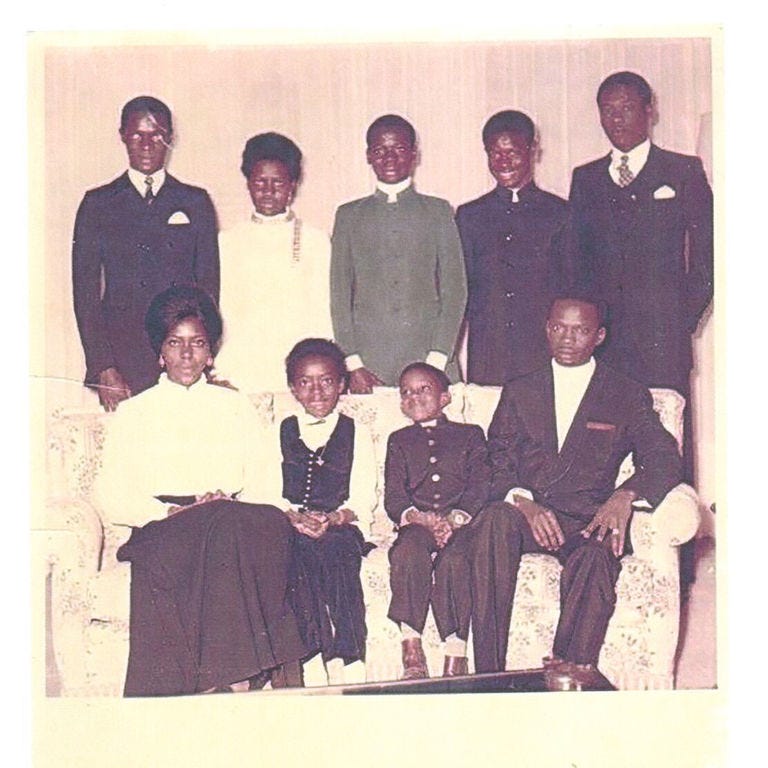
Needless to say, in September 1982 he got into École Polytechnique, graduating in 1984 before proceeding to the École des Mines de Paris (he finished top of his class), where he completed his engineering degree in 1986. These were the finishing schools at the summit of French technical education, with careers in major companies and the senior ranks of the state civil service all but guaranteed for its alumni. His upbringing had given him access to an exceptional preparation while his performance supplied ample evidence that he belonged there academically. For Amadou, admission to Polytechnique had already settled a much older argument. “People looked down on our people, our race, but you’ve shown we’re just as good as them,” he told his son. Thiam sees in his father’s delight the persistence of a colonial education: even men who had fought for independence continued to look to France for confirmation of their worth. His achievement carried expectations well beyond his own career.
He lived a very comfortable life as a student in France, an experience that would have been alien to most students of any colour or origin. Thiam recalls buying an Apple computer in 1982 (it would have cost around $1,400 in 1982. At the time Ivory Coast had a GDP per capita of $849), partly as a declaration of allegiance to America’s economic system in campus arguments about the free-market policies of Reagan and Thatcher vis a vis the communist-adjacent path France had embarked on following the election of François Mitterrand in 1981. He also drove a two-door BMW. He is quite explicit about what all of this meant: “My story in France is not one of rags to riches, of a difficult social ascension”, before turning almost immediately to the racial difference that he believes would limit his prospects.
Reading these contrasting passages of privilege and discrimination (often on the same page), I found myself experiencing a kind of whiplash. Some of the most revealing episodes take place over lunch when he is invited into polite French society (he suspects that he may be the first Black person his hosts have entertained.) He can discuss literature and politics and knows how to behave in such company. This familiarity with their world, he writes, “was probably both reassuring and, deep down, perhaps slightly challenging”. This is his description of what he imagines his hosts might be thinking and so the passage gives us a clearer view of his own sensitivities: even while participating in the conversation, he is considering what his presence means to the people who invited him.
This, in my view, is where his background becomes particularly interesting. His education and upbringing had prepared him to recognise the French elite as his peers. He had the cultural knowledge to join their conversations and the results to match their credentials. Yet he wondered whether they could see him without first having to account for his colour. Merely getting an invitation to lunch could not settle that question for him. He wanted to know whether he could belong there without being treated as an exception. I suspect this helps explain something about the preoccupation with race among sections of the African elite. Frequent contact with Europeans widens the surface area in which they can encounter prejudice, while familiarity and achievement raises the expectation of equal treatment. When he came to believe that colour still counted against him, that challenged his understanding of his place in the world.
Thiam’s account of looking for work after completing his education illustrates the protections he had that were unavailable to say a poorer black applicant. Having concluded that the “only explanation” for the multiple job application rejections he received was his outward identity, describing himself as black, Muslim and Ivorian in a republic that professed not to distinguish between its citizens, what followed is an unusually candid admission: “I rang my father for help.” He describes the shame of needing assistance when he wanted to succeed on his own merits. The availability of someone influential to call is an advantage many rejected applicants would perhaps have liked to feel embarrassed about.
The dean of admissions at Mines happened to take an interest in foreign students and suggested that Thiam might fare better with les anglosaxons. He recommended him to McKinsey, who at the time were recruiting a small number of graduates from the school. As Thiam recalls it, McKinsey was not somewhere he could simply telephone and introduce himself. McKinsey would go on to underwrite much of his career choices. When he tried development work at the World Bank in Washington, DC, and hated it, he returned to the firm; when a coup abruptly ended his later spell in government in Côte d’Ivoire, he returned again. He was no doubt an exceptionally competent employee, but having somewhere like McKinsey to return to meant that a wrong career decision, or a disaster beyond his control, need not have been fatal.
Later in the memoir, this vigilance against real or imagined discrimination reached a point I found dispiriting. Following advice from African American friends, Thiam says, he would avoid entering a lift in the United States if its only other occupant was a white woman, fearing that an accusation of assault would be believed over his denial. “Call it paranoia. Maybe.” I struggle to picture how consistently someone moving through his professional world could observe such a rule. More troubling is how little reassurance his extraordinary success seems to offer him. Earlier, a black cleaner at Prudential had told him that she kept his photograph in her son’s bedroom, urging the boy to aim as high. I found myself wondering what would she make of a passage in which the man she held up to her son as an example of what he might become still feels obliged to wait for the next lift.
His sense of being unfairly judged also leads him into some strained comparisons even if he has grounds for questioning the consistency of his treatment by the FSA. Challenging his treatment by Hector Sants and the regulator over the AIA affair, he points to everyone knowing “London was a giant laundromat for dirty money” and Fred Goodwin’s escape from enforcement action after the failure of RBS. The FSA investigated and considered action against Goodwin, but did not bring a case. Goodwin nevertheless suffered a public disgrace few would wish on their enemies: he was stripped of his knighthood and his name became a byword for banking failure. More pertinently, the FSA had already fined Peter Cummings, who ran HBOS’s corporate division, £500,000 and barred him from senior roles in banking and insurance in September 2012 for failures in managing lending risk. Thiam, by contrast, received a public censure without a personal fine. These were different failings, and Cummings’s punishment cannot determine whether Thiam’s was proportionate. Indeed, in their report on Thiam, the FSA acknowledged that there were no directly comparable cases to his on the facts, and that his breach was neither reckless nor deliberate. So his grievance can be taken seriously.
But Goodwin’s escape cannot by itself tell us that Thiam was singled out or answer the finding that he was involved in Prudential’s failure to notify the regulator about its proposed acquisition early enough (at a meeting specifically discussing Prudential’s Asian expansion and financing plans, Thiam had not mentioned the proposed acquisition. The book hints at why - he believed the information would leak out of the regulator.) The comparisons become even more strained at Credit Suisse, where, defending himself over the surveillance scandal that ultimately ended his tenure (more on this below), he invokes the bank’s history of opening accounts for former Third Reich officials and holding Nazi-looted Jewish assets. Those were grave matters but the comparisons are particularly frustrating because the case for his professional competence is strong enough to make on its own.
The London Years
After his frustrations in France, Thiam found London far more welcoming than he had expected. Jean-Marie Le Pen’s passage to the second round of the French presidential election in 2002 was the final straw in convincing he and his wife to leave Paris and accept a senior role at Aviva. “My colour didn’t seem like an issue for the first time during my professional life in Europe,” he writes. His new employer seemed pleased, even proud, to have recruited its first black senior executive. Years later, he would still marvel that London police had never once stopped him while he was driving. He is careful to acknowledge other black people’s experiences, but the contrast with his own life in France is quite clear.
His account of delivering an IT transformation at Aviva particularly caught my attention. Over the last decade and a half, I have worked on several transformations in insurance, many prompted by successive waves of regulatory changes, and I can confirm that bringing them to a successful conclusion requires almost superhuman levels of competence. Any executive unfortunate enough to be responsible for such a change programme needs enough technical understanding and authority to get anything done, a combination that is quite rare to find. Aviva’s contemporary assessment of his work confirmed this in its generosity. In December 2005, its chief executive, Richard Harvey, credited him with “contributing decisively to the group’s growth”. By 2006, he was running the European operations, where the business was expanding its reach in Ireland and Italy, among others. He achieved all of this without anything like a background in insurance, buttressing his reputation as one of the smartest operators in the City.
The years that followed the failed AIA bid at Prudential gave him a much longer opportunity to demonstrate that ability. The company’s existing Asian business grew gangbusters between 2009 and 2014, with sales and profits more than doubling. Under his tenure as CEO, the group’s share price trebled. By the announcement of his departure in March 2015, Prudential was worth about £42 billion. The shareholders who had resisted ponying up the money for his AIA acquisition had done very well from leaving him in charge of the company they already owned, the mark of a good CEO. Even that botched AIA deal offered him some vindication. It went on to IPO in Hong Kong in October 2010, a few months after the Prudential deal collapsed, valuing the business at around $30.6 billion. On the first day of trading, the shares rose 17 per cent, upping the value to approximately $35.8 billion. This was just above the $35.5 billion he had originally offered, making his judgment of the business’s value damn near spot on.
Britain’s interest in him extended well beyond his employers. Tony Blair recruited him to the Commission for Africa ahead of the 2005 Gleneagles summit. David Cameron later included him in his Business Advisory Group. In the book, he recalls his views being sought on the question of the Scottish independence vote, and approaches from Clarence House for his help. He helped lead the then Prince Charles’ Seeing is Believing visits, that brought business leaders into close contact with disadvantaged young people. He chaired the Association of British Insurers between 2012 and 2014. The fact that Britain could not get enough of him even travelled back across the Channel: in 2013, he was awarded the Grand Prix de l’Économie in Paris and he used the occasion to praise Britain’s “unique openness” to foreigners, including their access to the highest levels of government. For me, the apprehension I had felt watching those first months of his at the Pru now seemed a distant memory.
In 2015, at the height of his powers and full of well-earned confidence, he decided to leave for Switzerland and take charge of the storied bank, Credit Suisse. Almost immediately he knew he had made a mistake. He writes: “I left London with garlands. Sadly, I finished my next job in grime.”
Swiss Cheese
Upon arriving at Credit Suisse, Thiam found an unholy mess that had not been fully disclosed to him during his long recruitment courtship with the chairman, Urs Rohner. With his characteristic competence, he set about shifting the bank’s emphasis away from risky and volatile trading towards managing the wealth of rich clients in China and elsewhere in Asia. Euromoney was sufficiently impressed by his determined start to the job to name him Banker of the Year in 2018. But even in that moment, one endorsement he received would acquire an unfortunate resonance: “Tidjane Thiam has transformed this bank,” said Iqbal Khan, the executive running international wealth management.
His experience in London offered him little preparation for Zürich, and even where France had subjected him to humiliations, he had still spent years learning its institutional codes. In Switzerland, right from the off, he described a persistent sense that he did not quite belong. Newspaper attention to his Porsche Cayenne and first-class travel struck him as peculiar when some of his subordinates enjoyed the exact same things. Some things he saw were explicit enough to not need any interpretation. At Urs Rohner’s sixtieth birthday party in November 2019, a black performer appeared dressed as a cleaner (dancing while sweeping.) Thiam left the room and when he returned, some of Rohner’s friends were performing in Afro wigs. Credit Suisse apologised for offence caused, while disputing the account’s characterisation and denying any intention to offend.
By this point, his previously excellent relationship with Khan (who he had rapidly promoted) had badly deteriorated. The two men were neighbours, with their properties near Lake Zurich only separated by a fence, and so their quarrels moved between the office and their homes. There was soon some building construction work and tree planting which culminated in an apparent physical confrontation at a cocktail party. Eventually Khan left to join UBS and Credit Suisse hired private investigators to follow him, to establish whether he was recruiting its staff or stealing clients from their lucrative wealth management business. Khan found out about the surveillance in September 2019, which led to a confrontation in Zürich that brought the whole operation into public view (accounts of this confrontation differed.) A Credit Suisse inquiry found that Pierre-Olivier Bouée, the chief operating officer and Thiam’s longstanding lieutenant (the only person he brought with him from Prudential), had ordered it without informing Thiam. Bouée promptly resigned.
What eventually changed the board’s position on Thiam himself, according to Rohner’s later account, was the discovery that there had been a second spying operation, targeted at the bank’s former head of human resources, Peter Goerke. The bank’s major investors nevertheless backed Thiam, and some even insisted that Rohner leave instead. Harris Associates, then the bank’s largest shareholder, blamed a Swiss faction hostile to outsiders and resistant to reform while Rohner rejected suggestions of xenophobia. Thiam gives all of this a surprisingly compressed treatment in his memoirs. He cites legal reasons and, “above all”, personal propriety for declining to elaborate. Those constraints may explain why he could not give the fuller account a reader might have hoped for but he does spend time making a substantial case for himself: the surveillance was lawful, he had not authorised it, and a hostile establishment would have found some other reason to remove him anyway. He repeatedly calls it a “so-called scandal”.
But his own statement at the time of his resignation had said the surveillance “caused anxiety and hurt” and “should never have taken place”. The change of emphasis is worth noting as is the absence of any commentary on the intermediary responsible for arranging the surveillance who was reported to have died by suicide. An important part of the affair’s human cost is thus missing from the pages of his memoirs.
The subsequent regulatory findings further complicate his insistence that nothing unlawful had occurred under his watch. In 2021, the Swiss regulator FINMA reported that Credit Suisse had planned seven surveillance operations between 2016 and 2019, most of which went ahead. It found serious failures of governance and breaches of supervisory law, including inadequate controls and attempts to conceal activities. That finding did not establish that Thiam had ordered Khan’s surveillance, nor did it mean that every act of observation was itself a criminal offence but it did raise a substantial question about how the bank was being run under him. I finished these pages wishing he had felt able to say more (the book comes in at just under 200 pages and with so much left unsaid, it could easily have run to double that.) As you will note from all the links I have had to include in this piece, the opportunity he had to tell his story on his own terms has produced an account that still sends the reader elsewhere. His departure from Zurich (he was only given five days to leave the job and without any kind of handover) brought his years running major banks and insurers to an end.
Tidjane Thiam was something of a professional hero to me. I had quietly followed his career from the moment he arrived in London by reading almost every interview he gave. His appearance on Desert Island Discs in 2012 prompted a small change in how I assessed my children’s progress at school. Coming from France, he said, he had been pleasantly surprised to find that British school reports assessed achievement and effort separately. The distinction mattered to him because achievement often reflected a child’s natural ability, while effort showed “whether they had given it their best shot”. It revealed something of their character, “which is a much better indication of future success and fulfilment” (he returns to this point in the book.) I remember listening to him say that and picking up my children’s old report cards to check whether I had paid sufficient attention to their effort grades. Sometimes it takes an outsider to help you see what is in front of your nose.
A close reading of his memoir has complicated that admiration, but it has not extinguished it. It pains me to this day that this was how his time at the top of the industry ended.
Return to Africa
There is much left unsaid in this book, and I found myself wishing, for example, that Thiam had written more about his family. After all the space devoted to Mariétou’s influence, her death is dealt with surprisingly briefly, almost in passing. “Annette and I had separated after twenty years of marriage,” is all he tells us about the end of their union, before explaining that there was now nothing in his personal life to prevent a move to Zürich. There are some intimate moments to be fair: his regret that Amadou died only weeks before his appointment at Prudential was announced is plain to see. Anyone who follows him on Instagram will recognise the grief over his son Bilal, who died in May 2020, only months after the Credit Suisse departure. He writes about Bilal’s illness and death, and about his earlier difficulties at school, where teachers misunderstood his auditory processing disorder. The principal of his expensive Paris school had wanted him withdrawn because his marks threatened to lower the school’s average. His son’s experience changed how Thiam thought about achievement, and even how he recruited people. I would have welcomed more of these glimpses of the man beyond his career, even while I understand that he owes the reader only so much. The ambition with which the book ends takes him back to Ivory Coast, where so much of that family history unfolded.
Thiam’s attempt to contest the Ivory Coast’s 2025 presidential election against the incumbent Alassane Ouattara ended even before voters could pass judgement on him. He had become leader of the PDCI, Houphouët-Boigny’s old party, and had relinquished his French nationality in pursuit of his presidential ambition3. But an Abidjan court ruled that acquiring French citizenship in 1987 had cost him his Ivorian nationality, invalidating his earlier registration to vote. His removal from the electoral register then became the Constitutional Council’s basis for rejecting his candidacy. Ouattara went on to win a fourth term. Thiam had secured a major party’s backing and made himself a serious challenger, but the question of whether he could win was never tested. After Zürich, this was another disappointing end to an ambition I had wanted to see him pursue.
There was some particularly grim history to the way his political ambition ran into treacle. Ouattara himself had been excluded from elections in 1995 and 2000 amid claims that his origins made him insufficiently Ivorian. Under Henri Konan Bédié (Houphouët’s successor who had appointed Thiam to his first stint in Ivorian public service), it was the PDCI that had deployed ivoirité, the politics of authentic Ivorian identity, against him. Thiam now led that same party and while the legal mechanism used against him was different, the insinuations mobilised were very familiar. In February 2025, a minister in Ouattara’s government attacked Thiam’s Senegalese ancestry, openly contrasting Thiam’s acceptance into Houphouët’s family circle with the treatment once meted out to Ouattara.
The family loyalties were even more complicated: Thiam’s elder brother Augustin, a regional governor, has been a longstanding and prominent Ouattara supporter, and Ouattara himself, who had served as a prime minister to Houphouët, received Tidjane on his return from exile in 2022. But it is impossible to not detect Thiam’s disdain for Ouattara on the pages of the book (under Ouattara, he writes, “the country has slid progressively into authoritarianism”), something made even more explicit in a 2025 interview where Thiam dismissed comparisons between his career and Ouattara’s as “pure ignorance”. Their rivalry developed within a political world to which both men had considerable claims of access.
His account of leaving the Ivory Coast after five years running the DCGTx (something like Britain’s former Infrastructure Projects Authority) and a planning minister is affecting. As he approached the plane to leave the country in the wake of the military coup, his bodyguard told him: “Boss, I know you’re not coming back.” He recalls replying: “Shh. You’ll get us both killed.” More than two decades would pass before he returned. That long absence made me wonder about the confidence with which the memoir ends. His higher education and almost all of his professional life had taken place elsewhere but now he looked forward to spending the final stage of his working life in Africa, “back home where I belong”. Was this one final exercise of the optionality that runs through his story? Very few people can spend so long outside a country and return with a plausible prospect of leading its oldest political party.
At the beginning of the book, Thiam goes to Houphouët-Boigny’s tomb and asks for his blessing. He wants the old man’s job. His mother and grandmother are buried nearby and his father was imprisoned a few miles away. For all the distance he has travelled, this remains the place to which he returns to explain who he is. I find that attachment easy to believe. I hope there is a place for him in the country’s future, even if it is not the one he had imagined.
His final pages look ahead to what Africa’s young people might achieve with the education and opportunities they deserve. He has good reason to believe in both. His own life shows what ability can accomplish when it finds institutions willing to develop it, and how much freedom comes from knowing that a setback need not be final. I would like to see him put that experience to work for people whose lives have offered them fewer choices. Among the young Africans he writes about will be children with his gifts who, when their applications go unanswered, have no influential father to call.
See Martin Meredith’s The State of Africa, page 97
I found a family tree presented on television by Tidjane’s brother, Augustin, explaining the actual relationship between the Thiams and Houphouët. Mariétou was the daughter of Houphouët’s first cousin, making her his first cousin once removed, and Tidjane his first cousin twice removed. Got it? Seriously, ‘Uncle’ and ‘niece’ are just so much easier instead of having to bring out a visual aid to explain a family relationship.
The memoir’s introduction opens with his victory in the PDCI leadership contest in December 2023, recounting how he overcame a court order suspending the party congress. There is no mention in the book of the citizenship dispute but I take this to be a publication timing issue since the the book appeared on shelves on 28 August 2025, before September’s final rejection of his candidacy, but after his renunciation of French nationality in March and removal from the electoral register in April.
The bits about race was what caught my eye the most in the book, ironic that given the often criticized British approach to colonialism compared to France, it was in England where his race was least relevant to how he saw himself apart from the Ivory Coast of course.
I also wondered, how marrying Annette would have shaped his views on race, perhaps “contracting” a racial baggage that wasn’t necessarily his own in how he viewed the US.
Not sure I’ve fully formed the thought, but it’s an additional variable of wealth and status and the non uniformity of black experience.
Feyi, you write so well, bro. I started reading the review with the intent of just doing a few paragraphs (it's 3:30 AM here) and I couldn't stop. I've ordered the book. I met Tidjane at a private event in Como. He is very impressive and his private explanation went into a bit more detail than it appears the book covers - but his anxieties, the spoken and unspoken cost of his being Black and African in a space he was not expected to occupy also came through. Personally, I have immense grace for him since nobody gets a manual on how to be Black in high achieving spaces that actively negotiate your humanity. It's like Lewis Hamilton in Formula 1 or Jackie Robinson in baseball. That they succeeded despite the obvious difficulties is a testament to their personal brilliance. They, in my book, are allowed imperfections in how they responded.