

A few days ago at the Platform Nigeria event, Tosin Eniolorunda - founder and CEO of Moniepoint, the Nigerian unicorn that has rapidly grown from point-of-sale terminals into banking - spoke candidly about the struggle to find local talent. He revealed that the company had difficulty filling 500 open roles with Nigerian hires.
Moniepoint, which calls itself Africa’s leading payments infrastructure, raised $200 million last October, bringing its total funding to $320 million; by any measure it is a juggernaut in Nigeria’s and Africa’s tech scene. Eniolorunda’s remarks have since ignited a firestorm in the rarefied corner of the Nigerian internet where the country’s young elite talk among themselves. The comments start around 16:45 in the video below:
If I may be so presumptuous, much of the ensuing debate has been pitched, I think, at the wrong altitude. Some heard an insult to Nigerians; others heard a blunt truth about talent scarcity. Eniolorunda has since tried to clarify his remarks on X, explaining that his real complaint is the scarcity of senior technical talent still resident in Nigeria, the thinness of the feeder industries that supply them, and the way emigration - japa - continually drains an already shallow pool.
First, I want to articulate something that has been turning in my mind for a long time - something I am still learning how to express fully. In Nigeria today, the idea of government and the language of state responsibility have raced far ahead of the actual capacity of the state. Furthermore, the very existence of this idea of government has become an alibi for elite inaction. Because Nigeria nominally possesses a government charged with everything from education to security, the elite have learned to think differently about their own role - to see it as diminished, or even irrelevant.
Consider it another way: imagine Nigeria as a frontier country still in the process of being built and populated, where the government has only a faint footprint or is altogether absent. In such a place, whose responsibility would education and security be? The revealed preference of the Nigerian elite shows that, on some fundamental level, they already understand the answer. They never leave their own education or security to chance - which is to say, they never leave it to a government with almost no capacity to deliver either at scale.
Hunger Games
I like to describe Nigerian education as a sort of Hunger Games style tournament. The best way to illustrate this is by doing some data triangulation (there is no single data source for this, which itself buttresses the point I’m going to make).
Depending on definition and age range, Nigeria has roughly 18 million primary-to-secondary-age children outside of the formal schooling system. UNICEF reports that 12.4 million children have never attended school at all. These are children who are screened out of the tournament even before it begins.
Now of those who manage to beat this first hurdle of getting into school at all, staying in school gets harder the further they go. The MICS report [PDF, lots of data] defines dropout as the share of children who attended a given grade in one school year but were no longer attending the following year. For the last grade of a level, “dropout” means non-transition to the next level between the previous and current school year. MICS reports that dropout rates in primary are 3–6% in the lower grades but rise to 12% in Grade 6. In its dropout table, the primary-level dropout headcount is 1,353,300. I hope you’re keeping score - the tournament is heating up.
What if you make it past primary school? The next major hurdle point in the tournament is Junior Secondary year 3 (JSS3). MICS reports that junior-secondary dropout rises from 2% in Grade 7 (JSS1) to 8% in Grade 9 (JSS3). Its dropout table gives the junior-secondary dropout headcount as 504,800. The pathway analysis looks something like this - out of every 100 Nigerian kids aged 15-17, 72% made it into secondary school, 52% completed JSS3, and 51% transitioned to senior secondary school. The main issue after JSS is not only formal dropout but delay, over-age progression, and failure to reach senior secondary on time. MICS says 18% of 15–17-year-olds are still attending lower secondary when they should already be in upper secondary. That’s a topic for another day so let’s stay with the tournament.
The next major transition point is what happens after you leave secondary school. The MICS report says the senior-secondary dropout rate ranges from 3% in Grade 10 (SS1) to 84% in Grade 12 (SS3), but it also warns that Grade 12 dropout means the student had not yet transitioned to a higher level between the previous and current school year. So this is not the same as saying 84% will never enter university. Some may transition later; some may go to polytechnics, colleges of education, foreign institutions, vocational tracks or non-university tertiary routes.
We are now approaching the business end of the tournament. For the university end of the pipeline, NUC’s 2019 Statistical Digest records 2,159,461 [PDF, page 150 of this ridiculous report] students enrolled in Nigerian universities at all undergraduate and postgraduate levels, full-time and part-time. It also records 785,259 undergraduate new entrants in 2019 [page 183]. In that same year, the full-time undergraduate output was 197,873, and part-time undergraduate output was 15,842. Total graduate output across all programmes and modes, including postgraduate degrees, was 267,229 [page 280]. The 785k students are obviously not the same people as the 267k but it gives us a sense of what might be going on i.e. a significant number who enter university do not complete their studies.
Bringing it all together, UNESCO’s 2025 country profile puts Nigeria’s school-age population at about 37.3 million primary-age children, with 5.96 million in the last grade of primary age band. Against that sort of annual cohort size, roughly 300,000 undergraduate finishers is a very narrow far end of the pipeline.
Now let us award the tournament prizes. The federal government’s direct budget for tertiary education (Universities + polytechnics + colleges of education + a bunch of alphabet soup tertiary agencies like NUC and NBTE etc) came to ₦1.5 trillion ($1.1 billion) in 2025. The enrolment number for 2025 was certainly a lot higher than the 785k in 2019 above. Whatever the number is, this is what gets spent on them. We can add the new student loan scheme under NELFUND to this, because frankly, we all know those loans are never getting repaid in any meaningful way. NELFUND has so far disbursed about ₦242 billion ($177 million), in student loans, of which roughly ₦158 billion has gone to institutions and ₦85 billion to students as upkeep allowances. There’s also TETFUND, an earmarked tertiary-education intervention funded through the education tax system. Their currently published beneficiary list - 96 universities, 75 colleges of education, and 75 polytechnics - those per-institution figures imply an indicative total of about ₦537 billion ($392 million).
There’s more. The hunger games finish when you complete higher education in Nigeria and become part of that 300,000 figure or whatever the 2026 equivalent number is. At that point, you qualify for the National Youth Service Scheme (NYSC) where you pretend to work for the country for a year and the government keeps up that pretence by paying you a salary for 12 months. This NYSC alone is about 47% of the direct federal university budget, and about 33% of the broader direct federal tertiary budget in size. There is ₦486 billion appropriated to it in the 2026 budget.
Nigeria spends heavily at the narrow end of the pipeline - universities, NYSC, student loans - while millions are lost before they ever get close to that point. If your survive the hunger games, the government will open the funding taps to award your prizes.
How much, by comparison, is spent on primary education? Because primary education is the responsibility of Nigeria’s states, an estimate can only be reached through triangulation. According to the Nigerian Governors Forum, states spent or budgeted ₦1 trillion on education in 2022, ₦1.6 trillion in 2023, ₦2.4 trillion in 2024, and ₦3.6 trillion in 2025 - though in 2024 they actually utilised only 67% of the education budget, leaving an ₦800 billion shortfall. Those figures cover all levels of education. To isolate primary spending, we can draw a range from two states: a CSEA basic-education financing paper [PDF, page 19] shows that Kaduna allocated about 57% of its education budget to primary education, while Lagos allocated around 37%. That spread is useful: Kaduna reflects the public-school-heavy northern model, whereas Lagos has a much larger private-school sector. Taken together, the best estimate is that the 36 states and their local-government arms spend roughly ₦1.0 trillion to ₦1.2 trillion a year on public primary education - less than $1 billion at current budget exchange-rate assumptions.
What is spent on primary education - supposedly the foundation on which the entire system rests - amounts to a tiny fraction of what goes to tertiary education, by which point it is already too late to make much difference. The reason is not hard to decipher: the Nigerian government has no way of seeing its citizens. To extract anything for yourself, you must first make yourself visible through violence, hostage-taking, or sheer noise. University students and their lecturers are virtuosos of that particular skillset. Primary school children are not.
Pipeline Problems
It’s not hard to see why Eniolorunda and Moniepoint are struggling to fill 500 roles. There’s no great mystery in a country of 200 million people with high employment somehow struggling to fill 500 skilled positions: everyone is waiting at the end of the same tournament to grab the same 500 winners. As he put it in his clarification on X:
But we must tell ourselves the truth. Nigeria currently doesn’t have enough highly skilled technical talent resident in Nigeria to build companies that can scale globally.
Interestingly, I have also read a lot of employers double down and agree with my current diagnosis around our country’s technical talent pipeline gap and confirmed it is true. Former Minister, Kemi Adeosun also referenced Africa’s richest man, Alhaji Aliko Dangote comments around finding the right quality and quantity of talents for his refinery project.
Let me ask a hard question - can we say that Nigeria has enough highly skilled technical talent still resident in Nigeria? That's a huge conundrum that any organization that wants to maintain market leadership must solve for.
It is definitely true. If you and everyone else are trying to hire from the same shrunken pool of tournament winners, scarcity is inevitable. And that is even before you consider what children are learning in school - if they’re learning anything at all. The country can keep pretending the problem isn’t there, but it remains a handbrake on whatever development ambitions Nigeria might hold.
Here we come to a fundamental question and why I’m writing this piece. I am here to tell you that the job of increasing the size of that pipeline belongs to Eniolorunda as much as anyone else. It is his responsibility.
I like to use the United States as my go-to development template (I know, I am almost alone in this but I shall continue this good fight on your behalf). Even by 1930, the US government was spending only about 3.6% of GDP - this was all government spending, meaning education would have been some small percentage of that. This gives a sense of how small Washington still was before the fully matured twentieth-century state. But Congress had already used post roads and subsidised newspaper circulation to build national communications infrastructure, and the Morrill Act used federal land grants to create colleges for agriculture and the mechanic arts. But here is the thing - just because a state is thin does not mean that the burden of building up human capital is somehow removed. It is redistributed.
The entrepreneur’s burden - especially in a country like Nigeria - is not just to wait for the conclusion of the tournament to hire skilled people. It is to help build the institutions through which ordinary people become skilled. I don’t make the rules. If you have been successful in Nigeria, the responsibility to do things that might seem like the job of the state automatically falls on you. Since there are a tonne of things the Nigerian state does very badly, the avenues for intervention are endless. Since upgrading human capital provides by far the best returns, I prefer to focus on that.
Rosenwald
Julius Rosenwald was an American businessman and philanthropist, born in Springfield, Illinois, in 1862, to German-Jewish immigrant parents. He grew up close to Abraham Lincoln’s world - literally: he lived in Springfield and as a boy even sold pamphlets at the 1874 dedication of Lincoln’s tomb, where Ulysses S. Grant spoke. He attended public school, then left high school as a teenager to work in the clothing trade in New York.
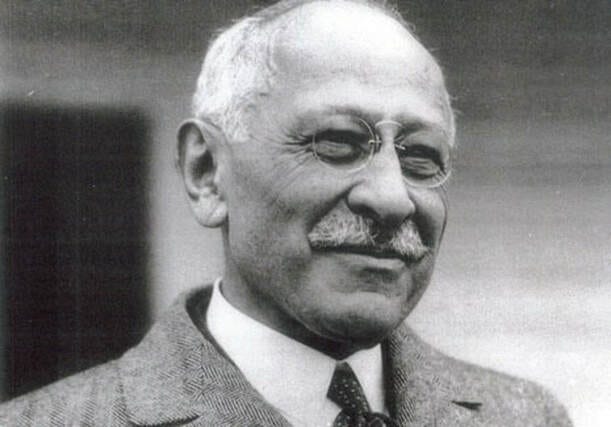
He then moved into the wholesale clothing business, eventually entering the orbit of Sears, Roebuck & Company, the great mail-order retail firm that served rural America. In 1895, Rosenwald and his brother-in-law Aaron Nusbaum each invested $37,500 in Sears. Rosenwald rose rapidly: he became vice president in 1896 and president in 1908, later serving as chairman until his death in 1932.
He didnt just use his wealth to donate to schools however. He forced a coalition between Black communities, local government, and philanthropy to build educational infrastructure where the state had failed. His business genius was organisational. Sears was a mail-order company selling to a vast, scattered rural population. That required catalogues, logistics, inventory control, customer trust, fulfilment systems, and a national commercial imagination. Rosenwald identified and implemented management and business strategies that drove Sears’s growth in dry goods, consumer durables, hardware, furniture, farm equipment and other goods across the United States through catalogue marketing.
That background shaped his philanthropy. He thought like a systems man. The Rosenwald school programme he came up with was not “charity” in the normal sense. It was logistics, standards, incentives, co-financing, accountability, replication, and scale.
He was not a revolutionary in the modern ideological sense. He worked within the constraints of Jim Crow America. He did not launch a direct frontal attack on segregation but he did something that was, in practice, deeply disruptive: he helped Black rural communities secure real buildings, better teachers, longer school terms, books, and a stronger claim on public funds. Rosenwald later described his own philanthropy as an attempt to “cure the things that seem wrong.” He also did not like simply handing money over. He preferred to use matching grants, co-investment, and local commitment. He was described as an “unorthodox philanthropist” who opposed perpetual endowments. In his 1929 Atlantic essay, he argued that permanent endowments could make institutions “endowment poor”, that is, wealthy on paper but unable to seize urgent opportunities.
His own Rosenwald Fund was deliberately time-limited. It was created in 1917 and closed in 1948, after spending itself down. This was intentional: Rosenwald believed each generation should take responsibility for the problems of its own time. That is to say - do not build monuments to your own virtue; build mechanisms that solve live problems (one reason Rosenwald is less famous than Carnegie or Rockefeller is that he resisted turning philanthropy into self-advertisement. He did not want his name plastered everywhere.)
The decisive personal connection that motivated him to invest in black education was Booker T. Washington. Rosenwald read Washington’s Up from Slavery, met him in 1911, and became convinced that Black education in the South was a major moral and national problem. In 1912, he gave Washington $25,000 for Black colleges and preparatory academies; Washington then proposed using a portion of it to help Black communities near Tuskegee build rural elementary schools, on condition that the communities raised matching funds. The context was grim. Southern public education was underfunded generally, but Black education was far worse. Around the turn of the twentieth century, former slave states spent about $4.92 per white child versus $2.21 per Black child. There is a real parallel here with Nigeria: the state existed, school boards existed, taxation existed - but Black children were still being denied serious educational infrastructure. The state can exist formally while leaving millions outside the machinery of human capital formation.
Designing a school programme
It’s worth outlining how Rosenwald’s school programme worked in some detail.
The first phase worked through the Tuskegee Institute. Rosenwald gave Washington funds and Washington used part of the money to support rural school construction near Tuskegee. By Washington’s death in 1915, Rosenwald had supported grants for around 80 Black schools in three states.
As the programme grew, it became too large for Tuskegee to administer informally. Rosenwald created the Rosenwald Fund in 1917. In 1920, the programme moved its headquarters to Nashville, where staff set clearer standards and administered grants at scale.
Communities had to raise money, contribute labour, donate land or materials, and secure public support. The Fund required matching funds from the Black community and the white school district. This was both powerful and morally complicated. It was powerful because it forced local governments to contribute. It was morally complicated because Black communities were already taxpayers and were often being made to pay again for schools that public authorities should have funded properly in the first place. Still, as a mechanism, it worked. The Fund contributed $4.3 million, Black communities contributed $4.7 million, and local governments were compelled to spend $18.1 million.
The schools were not meant to remain private charitable schools. They were to become part of the public school system. Black communities often bought land and built schools that were then turned over to local school authorities. In other words, Rosenwald wasn’t so much substituting for the state as dragging it into its responsibility.
The Fund issued school plans and insisted on standards. Early designs came from Tuskegee’s architectural programme; later, after the move to Nashville, architect Fletcher Dresslar revised the plans. The schools were designed for light, air, comfort, and health, with careful attention to windows, ventilation, paint colours, site orientation, and classroom layout. Rosenwald was funding quality, not just buildings. Many rural Black children had previously studied in churches, barns, fields, or improvised rooms. A Rosenwald school was meant to embody order, dignity, light, seriousness, and modernity. The Rosenwald Fund refused to make final payments on buildings that failed to meet its exterior or interior standards.
The Fund also supported teacher homes, known as teacherages, because teachers often came from outside rural communities and needed somewhere to live. It also funded shop buildings for practical training in carpentry, metalwork, agriculture, and related skills.
By the end of the fund in 1932, the numbers looked something like this - 4,977 schools funded, 217 teachers’ homes, 163 shop buildings, 16 states covered, and 663,625 students served.
A small ray of hope
I’ve long been drawn to the Rosenwald story - there was a documentary about him a decade or so ago, well worth finding if you can - because it illustrates how a privileged elite can take up the obligation of nation-building as a distributed effort in places where government simply cannot meet its responsibilities. Consider the 1,681 public library buildings funded by Andrew Carnegie’s foundation, with communities themselves committing public money to maintain them; or the more than 100,000 demonstration farms that John D. Rockefeller’s General Education Board created in partnership with the USDA, guided by the logic that higher agricultural productivity would lift incomes, and higher incomes would in turn widen the tax base for public schools; or Peter Cooper’s Cooper Union, created on the proposition that education served not just prosperity but civic virtue. Cooper made it free for the working classes, opened it to women as well as men, imposed no colour bar, and stocked a public reading room with newspapers and periodicals. These endeavours are all of a piece - the same tradition of a shared burden willingly shouldered by the elite to build a society.
Nor did they take the easy way- merely writing cheques for a university or covering lecturers’ salaries. Instead, they brought the experience they had earned in business to bear on philanthropic nation-building, targeting the problem directly and in a structured, sustainable way. That is why I consider the current class of Nigerian billionaires more or less a lost cause. Having made their money through no great feat of innovation, they have little from their own business lives to bring to bear on the nation’s myriad problems.
This is why today’s Nigerian founders and entrepreneurs matter. Unlike many of the billionaires before them, some have actually built operating companies inside Nigerian conditions - solving for trust, payments, logistics, distribution, regulation, fraud, infrastructure, and talent. They have made things work where they were not supposed to work. That experience is not nothing.
So when a Nigerian entrepreneur says he cannot find 500 people to hire, my response is not “How dare you?” It is: “Congratulations. You have discovered the country you live in.” And having discovered it, the question becomes what you intend to do about it. If you have somehow made serious money in Nigeria as it currently exists, then the responsibility of improving Nigeria’s human capital has become yours as well. This may be annoying. But that is how success works in a poor country: you do not merely acquire wealth, you acquire homework. (I have cleverly protected myself from such expectations by not being a billionaire.)
The talent shortage is not an inconvenient externality but part of the same society from which your business draws customers, workers, legitimacy, and profit. The broken school system, the weak reading culture, the complete lack of investment by the elite in knowledge production, the absence of serious vocational formation - these are now upstream of your balance sheet and it is enlightened self-interest to want to fix them. A country that cannot produce enough educated people will eventually grow hostile even to those who found a way to prosper inside it. You can build a great company in such a country, but you cannot build an indefinitely successful business on top of a permanently undereducated society.
The next frontier is not another app. It is the Nigerian mind.
Really loved the analysis and depth of thinking in this post. The point is that this is hard work and it needs to be done with a similar level of thinking and dedication that these star entrepreneurs have applied in building their businesses.
Tosin is probably already doing more than most entrepreneurs in his generation regarding education. Among other investments, he built the AutoCAD studio at OAU’s Mechanical Engineering department, which was a most welcome intervention. The broader challenge I see is how to do this at scale and at earlier parts of the pyramid as well, given that only a few people make it to university to begin with.
I also really liked the closing sentence: “The next frontier is not another app. It is the Nigerian mind.”
Nigeria’s elite already understand that the state lacks the capacity to reliably provide education, security, or opportunity at scale — their own private choices proves it. Yet many still speak as though nation-building is solely the government’s responsibility.
What Feyi clearly points out in this article is that in weak states, elite obligations [should/must] expand. The burden of developing human capital shifts to those with wealth, influence, and operational expertise.
The most impactful philanthropists in history did more than donate money; they applied the systems thinking, discipline, and problem-solving skills from business to nation-building. That is where many Nigerian billionaires fall short. Too many have profited from extractive systems without building transferable institutional knowledge or innovation capacity.
Ironically, Nigeria’s newer generation of founders may be better positioned to help because they have actually solved difficult problems within Nigerian conditions.
So when business leaders complain about talent scarcity, the real question is not whether the problem exists — it does. The question is whether they are willing to help build the pipeline that produces the talent they need. In a country like Nigeria, wealth is not just privilege; it is responsibility.