

This newsletter will take a one week break and return on 31st October. Stay out of trouble while we are away.
Enjoy the week’s selection below.
Nigerian Media
Abdullahi Abubakar was blind for 27 years. And then came surgery at the Makkah Specialist Eye Hospital in Kano:
How would you describe your experience with blindness before the surgery?
We went to many hospitals, but God did not make it successful. Eventually, I gave up and accepted my fate. Blindness comes with many challenges. Even at home, you feel the difference because people treat you as if you were of no use except to be fed and cared for.
But I refused to give up. I studied Islamic knowledge and tried many trades because I did not want to beg. I sold water fetched from the river in buckets; I sold animals, and later begged when there was no other option. I had friends who guided me wherever I went.
How did you lose your sight?
I developed the condition around the age of three. Because I was very young, I cannot remember how it happened. I have lived with blindness for 27 years. I am now 30.
How was the surgery carried out?
In the past, I tried many medicines in different hospitals. They often told me that I would not recover unless I went abroad for surgery. From then I gave up on treatment. It has been nine years since the search for cure began.
Recently, a neighbour who is a policeman took me to a hospital in Kano. They ran tests and said my eyes could be restored but surgery on the eye nerves was needed, costing N180,000. I could not afford it, so I tried to raise money from relatives and friends but failed.
Later, Wudil Local Government announced that those with eye problems should come for assistance. I showed them my test results and they said my case was treatable. We went to the Makkah Specialists Eye Hospital in Kano, where they confirmed that surgery could succeed. On the appointed day, the surgery was done.
As is the case with Nigerian newspapers, they report a crazy story with as little detail as possible:
A Borno State High Court sitting in Maiduguri has sentenced a 37-year-old woman, Fatima Sanda, to two years’ imprisonment for procuring a 16-year-old girl for sexual exploitation.
PUNCH Metro learnt on Wednesday that the conviction was secured by the National Agency for the Prohibition of Trafficking in Persons on Monday.
NAPTIP disclosed in a statement published on its Facebook page that the court also ordered Sanda to pay N500,000 in compensation to the victim.
The statement read, “A High Court of Justice, Court 10, sitting in Maiduguri, Borno State, presided over by Hon. Justice Aisha M. Ndume, has convicted Fatima Sanda (37, female) for procuring a 16-year-old female victim and subjecting her to sexual exploitation by other persons, contrary to Section 16(1) of the Trafficking in Persons (Prohibition) Enforcement and Administration Act, 2015, as amended.
“She was sentenced to two years’ imprisonment and ordered to pay N500,000 in compensation to the victim.”
Greener pastures in Indonesia…and a warning had to be issued:
Nigerians seeking greener pastures in Indonesia have been advised to invest in their home country rather than relocate without viable business plans, as employment opportunities for foreigners are limited and setting up businesses requires substantial capital.
The Charge d’Affaires ad interim of the Nigerian Embassy in Jakarta, Eze Nduka, gave the advice while speaking to journalists at the embassy on Tuesday.
Nduka said many Nigerians had spent between 10 and 15 years in Indonesia without meaningful employment, while some had become stranded and were seeking assistance from the embassy to return home.
He urged Nigerian youths to verify claims about opportunities in Indonesia and avoid travelling based on promises made online, particularly those linked to drug trafficking, cybercrime and other criminal activities.
According to him, some Nigerians have also spent years in the country without valid immigration documents, restricting their freedom of movement and access to opportunities.
He advised prospective migrants to develop clear plans before travelling, including identifying whom they intend to meet, the business they hope to establish and how they would sustain themselves.
This newsletter covers a lot of stories about Nigerians scamming foreigners around the world but the truth is that whatever is the opposite of charity begins at home. Whatever the number of Nigerians scamming non-Nigerians is, it is 100x for Nigerians scamming other Nigerians. Perhaps the most common version is fake products:
The Lagos operation was not the only disturbing discovery. In Aba, Abia State, NAFDAC operatives acting on credible intelligence raided shops at Old Court Road Market, an area the agency described as notorious for counterfeiting and producing packaging materials for highly branded spirits, wines and other regulated products. What they reportedly found was a large quantity of labels, corks and outer packaging materials bearing the names of established brands.
Among the products identified were Jameson, Glenfiddich, Four Cousins, Lord’s Dry Gin and Imperial Blue. Materials bearing the names of Chelsea, Squadron and Seaman’s Aromatic Schnapps were also recovered. The agency further reported finding packaging materials associated with Goya oil.
The concern is that such materials, when used fraudulently, can help counterfeiters make unauthorised products appear to be genuine goods from established manufacturers.
NAFDAC estimated the value of the counterfeit packaging materials removed from five shops at more than ₦200 million.
The operation, however, was not without resistance. According to the agency, traders confronted operatives with threats and intimidation. Some reportedly pursued the vehicle transporting the recovered materials and threatened individuals assisting with their evacuation.The owners of the shops visited reportedly fled, while the affected premises were placed on hold pending further action.
The discoveries in Lagos and Aba point to different but potentially complementary aspects of the counterfeit trade, suspected operations involving the contents of drinks in Lagos, and the availability of packaging materials capable of making unauthorised products resemble established brands in Aba.
The death of Toluwanisings really hit me badly this week. As someone whose music I greatly enjoyed and followed his career from the very early days. He seemed to have finally broken through and hit his stride in the last couple of years. Reading the circumstances around his death just makes me angrier:
Speaking about the circumstances surrounding the death on Thursday, Babadunni said he was away when the incident occurred but rushed to the scene after receiving a call.
“I am Babadunni Gbolabo. I am the PA to ToluwaniSings. When it happened in the morning, I wasn’t here, so they called me and I came,” he said.
He said the hospitals gave different reasons for their inability or unwillingness to treat the singer, with some citing an ongoing strike and the absence of doctors.
“There was nothing wrong with him. He was very fine and in perfect condition. He just slumped. They tried to resuscitate him. They went helter-skelter. They took him to some hospitals, but they were giving excuses.
“Some said doctors were not working because of the strike. Some did not admit him at all. That is how it went. We tried our best, including prayers. We took him to up to seven to eight hospitals in Ibadan, but God said his time was up,” Babadunni said.
ToluwaniSings died on Wednesday, a day after reportedly performing at a worship event.
We go over to the Mapo Customary Court:
A woman, Walimot, has filed for divorce against her husband, Hameed, at the Grade A Customary Court sitting in Mapo, Ibadan, Oyo State, accusing him of irresponsibility, incessant quarrels, theft and threats to her life.
Walimot told the court that she was Hameed’s third wife and had known no peace since she married him.
The plaintiff stated that she met and fell head over heels in love with Hameed, who reciprocated her feelings by showering her with affection.
She explained that she accepted his marriage proposal because she believed he genuinely loved her.
However, she later realised that she had been deceived.
Walimot said she discovered too late that her husband was more interested in her money and property than in her.
She alleged that, from the beginning of their marriage, Hameed had demanded that she transfer ownership of her property to him, a request she refused.
The plaintiff further accused her husband of secretly transferring money from her bank account into his own while she was asleep at night.
According to her, Hameed would delete the transaction notifications from her phone to conceal his alleged acts.
Quite an interesting story about the limits of copyright and trademarks in Nigeria. Sometimes the same idea comes to different people at the same time but is that the case here? The courts should decide:
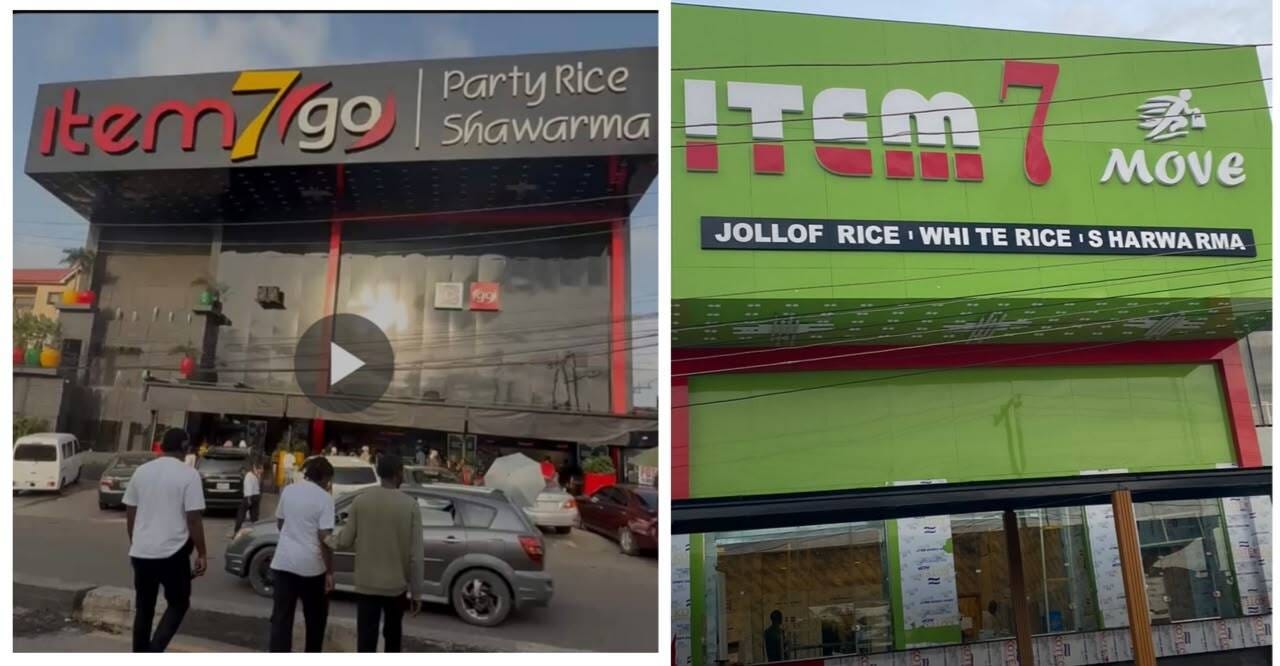
Two quick-service restaurant businesses in Nigeria’s food industry could be heading for a legal showdown over allegations of brand imitation, trademark rights and fair competition.
The controversy surrounding Item 7 Go and the newer Item 7 Move has generated online debate, with observers questioning whether the similarities between the two businesses amount to legitimate competition or an attempt to benefit from an established brand’s identity.
Item 7 Go is a Nigerian quick-service restaurant (QSR) chain founded in 2012 by Ibigbemi Oloruntobi, a physics graduate of the University of Ilorin. What reportedly began as a small food stall near the university has grown into a multi-branch business operating in cities including Lagos, Ilorin, Ibadan and Abuja.
The business built its identity around affordable meals and the popular Nigerian slang “Item 7”, commonly used to refer to food.Item 7 Move, a newer food business operating in Owerri, Imo State, has drawn attention because of similarities observers have identified in its name, menu concept and overall presentation.
The similarities have fuelled questions about whether the newer business is simply competing within the same market or adopting elements of an existing brand that could confuse customers.
Non-Nigerian Media
Izuchukwu Ozurumba has cooked all the way to the US Supreme Court:
The US Supreme Court agreed on Tuesday to hear a bid by President Donald Trump‘s administration to deny asylum to a man who was forced to prepare meals for an apparent separatist group in Nigeria, in a case that could expand what officials may deem terrorist activity under American immigration law.
The justices took up the Justice Department’s appeal of a lower court’s ruling in favor of Nigerian citizen Izuchukwu Ozurumba, who was denied US asylum due to his work cooking for a group known as the Unknown Gunmen that US officials considered to be a terrorist organization. The lower court ruled that cooking did not qualify as “material support” for terrorism under the immigration statute.
The administration, in appealing the case to the Supreme Court, said that if the lower court’s ruling were allowed to stand, it would “substantially increase the burden on the government in excluding aliens with links to terrorism.”
The case centers on whether Ozurumba’s work for the group fell under provisions of US immigration law that bar the entry of non-US citizens who have “engaged in a terrorist activity,” including actions that provide “material support” for such activity or “to a terrorist organization.”
“At stake in this case is whether the government can use an overly broad reading of the law to shut the door on people seeking asylum,” said Aimee Mayer-Salins, an attorney with the Amica Center for Immigrant Rights, which is helping to represent Ozurumba.
The lower court “correctly recognized that asylum should not be denied to immigrants who provided no meaningful support to a terrorist group,” Mayer-Salins added.
Following a job tip in 2022, Ozurumba took a van to a remote camp outside of Lagos, according to court papers. After he was hired, he eventually learned the camp was run by the Unknown Gunmen, a group likely associated with Nigerian separatists, according to court papers.
Ozurumba soon “observed that the young men’s movements from the camp coincided with news reports of murder and arson,” his lawyers said in a court filing. Ozurumba sought to leave but was forced to stay without pay, they added.
After six months he escaped while on an outing for supplies, eventually making his way back to Lagos, they said.
Ozurumba then faced beatings and threats of death, prompting him to flee to Venezuela, where the threats continued, his lawyers said. Ozurumba then traveled to the southern US border and entered the country illegally in July 2023. Ozurumba eventually applied for asylum and other protections from deportation.
New scam just dropped:
Authors have been warned about a wave of scams in which fraudsters use artificial intelligence to impersonate agents, publishers and marketers.
Ian Gardiner, 76, a former Royal Marine who served in the Falklands and now writes military history books, received an email from someone purporting to be from the Silent Book Club, an established global group.
“One has an ego and if someone approaches you with a very well-researched review, brimming over with praise saying ‘your book deserves a wider audience’, that grabs your attention. You’ve got to be pretty hard-skinned not to think, ‘Oh that’s a nice idea’,” Gardiner said.
The scammer, using the name Thomas Negron, who had an AI-generated image on his email signature, offered to showcase Gardiner’s book at clubs in New York. All he needed was money to pay for a promotional video.
Gardiner, a former equerry to Prince Philip, ended up paying about £700 for the video, produced by the fraudster’s accomplice, which he said was “utter crap”. When Negron wanted to promote another of Gardiner’s books, he smelt a rat and reported it to the Society of Authors which identified it as a scam.
“I wondered what to do,” Gardiner said. “Do I admit it? Either you keep shtoom about this and it burrows away at your soul. Or you come out and you expose it.”
Diane Upton-Hagan, 76, an American conservation artist and author, says she lost $200,000 to scammers.
[…]
Strauss said she had traced many of the scammers to Nigeria, but there were different versions that emanated from Pakistan and the Philippines. She believes that Google could do more to detect the scammers, many of whom use Gmail for the initial approach.
And from a story about the FBI busting a North Korean online scamming operation:
The F.B.I. last month disrupted a widespread network of American facilitators accused of aiding the North Korean government in securing remote information technology jobs that helped fund the reclusive country’s nuclear and ballistic weapons programs, U.S. officials said Tuesday.
The operation included the dismantling of more than 40 so-called laptop farms across Texas and the seizure of nearly 200 computer devices, the officials said, marking one of the largest efforts to date by U.S. authorities to block a key revenue stream that has helped North Korea evade harsh international sanctions and generate billions in cash in recent years.
The Justice Department separately unsealed indictments in Ohio on Tuesday against two U.S. nationals and 10 China-based North Koreans accused of committing identity theft to earn paychecks from unwitting American companies that hired them. Prosecutors said that scheme bilked 70 companies out of more than $3 million and ran from 2019 to 2025. The identities of two additional defendants remained under seal.
The moves were the latest by the United States in an intensifying campaign to try to cut off a stealthy and evolving digital threat from North Korea whose scale is not entirely clear but likely vast. U.S. intelligence officials in both the Biden and second Trump administrations have said the I.T. worker scams are a primary method of funding Pyongyang’s weapons program, alongside thefts of cryptocurrency.
[…]
The tactics of North Korea’s I.T. worker army have steadily evolved to evade detection. That includes increased reliance on artificial intelligence to create fake résumés, videos and photos, and to navigate virtual job interviews, officials said. The fraudsters are also relying more on subcontractors in places like Pakistan and Nigeria to further obscure North Korean involvement, Mr. Leatherman said.
A story about mining in Nigeria and the sheer amount of earth you have to shift to get any valuable resources out. And when you’re doing it in a heavily populated country like Nigeria with people everywhere:
Muyideen Adegboyega set off on his scooter one morning in October 2022 to make a familiar trip to a local market.
As he drove down a road close to the town of Iperindo in southwest Nigeria, he was struck and killed by a flying chunk of rock from a nearby explosion.
The blast came from the Segilola gold mine, whose southern area is close to Iperindo. The only large-scale commercial gold mine in Nigeria, Segilola is owned by the Canadian mining company Thor Explorations with a registered office in Vancouver and an operating office in London, U.K. The mine is run by Thor’s 100 per cent subsidiary, Segilola Resources Operating Limited.
Residents say blasts like the one that killed Adegboyega are a regular danger for thousands of people who live near the mine, in Nigeria’s Osun state.
His death has become emblematic of local concerns about Segilola’s operations, which some residents blame for damage to their homes and others for breathing difficulties, allegations the company disputes.
Interviews with home owners and local leaders show much of the community living in fear, with houses cracked and collapsing from what many believe are the effects of the mining operations. Some said they have developed health issues from dust they believe to contain dangerous chemicals, caused by the explosions.
They say the blasts at the mine site, which happen three to five times a week, make their daily lives unbearable. A teacher said blasting occurs during school hours and a student said the experience can be terrifying.
“We, including our neighbours, are scared … that one day the blasting will destroy our houses and kill people in the process,” said Gbenga Adedokun, a farmer living near the mine.
Iperindo farmer Mosunmola Omoniyi said his house has cracked from the blasting. He told reporters, “Whenever they blast, often it feels as if the whole house will be uprooted. From the roof to the foundation of our house, everything will shake.”
News from Sussex:
The day gave residents the opportunity to experience new flavours and traditional dishes, while members of the team shared their culture and enjoyed preparing and eating the food together.
The celebrations began with a breakfast of yam and egg, served with Milo, before lunchtime brought a feast of jollof rice with meat and plantain, accompanied by mild pepper soup and a refreshing malt drink.
The day ended with a traditional supper of Ogi and Akara – pap and bean cake.
Residents and staff got involved in preparing the food and were encouraged to try dishes they may not have tasted before. There were plenty of happy faces and clean plates as everyone tucked into the different meals and enjoyed discovering new flavours.
Karen Tolton, Manager at Duckyls Farm, said: “We are very fortunate to have such a rich and diverse cultural mix among our team and we love finding opportunities to share different cultures with the residents at Duckyls.
“Food is such a wonderful way of bringing people together and Nigeria Day was a fantastic example of this. Everyone got involved in preparing the food, learning about the different dishes and, of course, trying them for themselves.
Post and Courier with another banger (see BTH - 84 for previous long read on Sambo Dasuki and some horses):
More than 60 Nigerian officials — many publicly accused of corruption — parked roughly $271 million in American real estate over the past 30 years, including properties in Aiken and Spartanburg highlighted by a Post and Courier investigation last year, global anti-corruption groups revealed.
The eye-popping $271 million total illustrates how foreign officials can use American real estate to hide money looted from their governments, according to the “Dirty Deeds” report by Platform to Protect Whistleblowers in Africa (PPLAAF) and the Anti-Corruption Data Collective.
Nigerians and their families appear to have bought many of these properties with cash while they held public offices, the groups’ report said.
The findings also expose holes in America’s anti-money-laundering laws and raise fresh questions about recent moves by the Trump administration to weaken anti-corruption laws.
Jimmy Kande, PPLAAF’s executive director, said the “unprecedented scale” of these American real estate purchases exposed gaps in how stolen money crosses borders “and settles quietly into foreign real estate.” He called on authorities in Nigeria and the United States to recover this “stolen wealth.”
[…]
The “Dirty Deeds” report also identified more than $20 million in U.S. real estate investments by Orji Uzor Kalu, a prominent Nigerian senator and business magnate, and his family members.
The Post and Courier previously reported that Kalu owns or has corporate and family connections to five properties in South Carolina worth at least $2 million on tax rolls and properties worth more than $4.7 million in the Charlotte metro area.
One of those properties is a 4-acre tract in the Saxon area of Spartanburg County. A man at the site who identified himself as Nnanna Utah told The Post and Courier last year that Kalu “can buy anything anywhere in the world he wants to,” but “likes South Carolina because he was doing business here even before he made a dime.”
Kalu was convicted on corruption charges in Nigeria, but in 2020 a higher court overturned the conviction and set Kalu free. Prosecutors with Nigeria’s Economic and Financial Crimes Commission pledged to retry the case but have yet to do so.
In all, the “Dirty Deeds” report identified 284 American properties worth $271 million that were linked to current and former high-level Nigerian officials. Of these, 152 properties worth approximately $177 million were acquired while the officials were in office.
We’ve covered several stories like this over the years on BTH. This time its Adedamola Ajani:
Late in the summer of 2022, preparing for his second season as coach at his alma mater, Speedway coach Shane Clampitt scheduled a preseason scrimmage with Western Boone.
A state powerhouse at the 2A level, WeBo won three-straight state titles between 2018-20. Clampitt knew the Stars would give him an honest look at his own team.
Nothing that day caught his eye quite like what he saw from his starting right tackle.
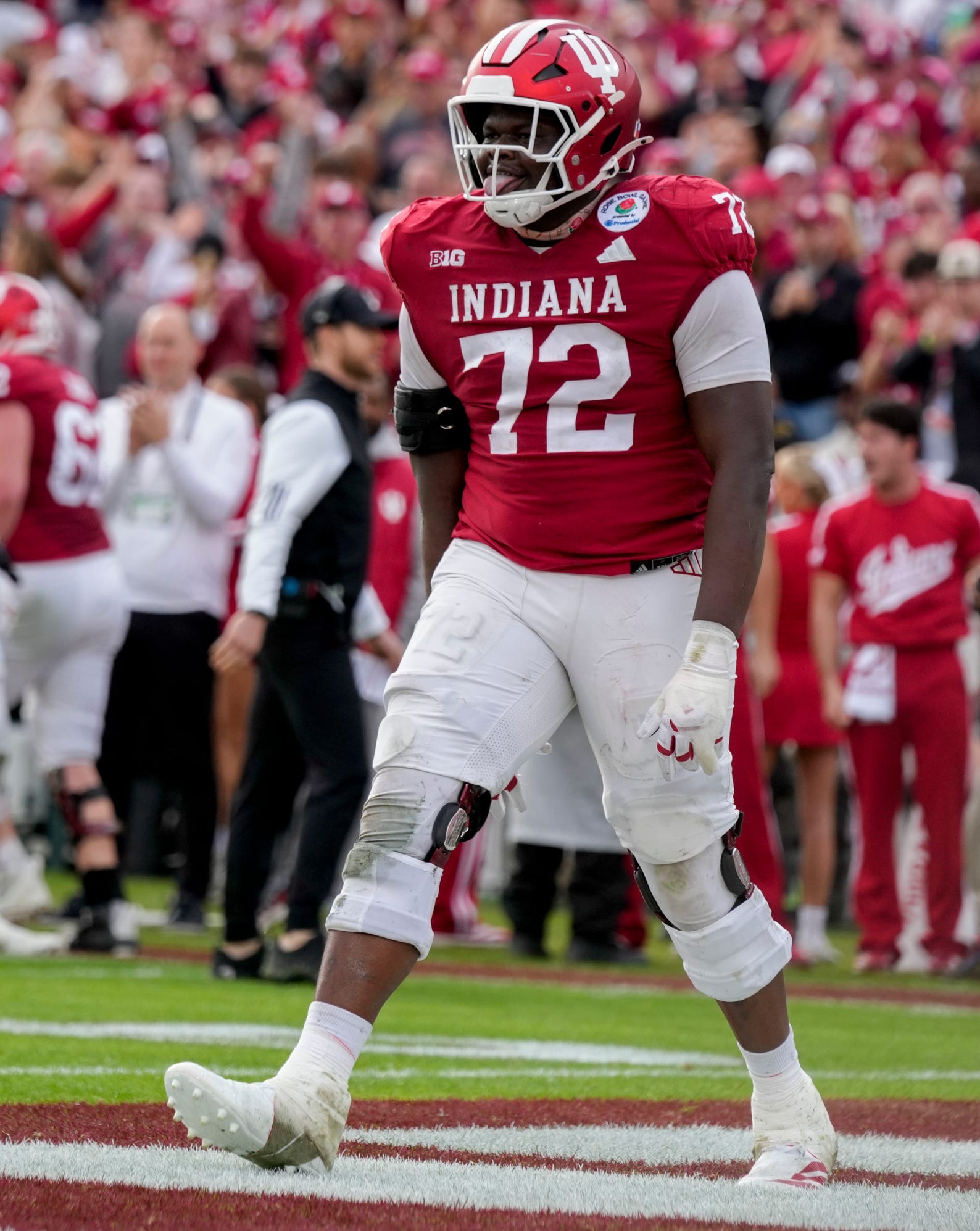
IU football‘s Adedamola Ajani — Damola, to friends and family — arrived in Indiana having never played a down of football in his life. Born in Nigeria, Ajani grew up on soccer and basketball. As his frame stretched out to 6 foot 4, Ajani figured the latter sport would be his future.
Until Clampitt introduced him to football, a sport his mother, Adeola, feared, and one Damola himself barely recognized. He spent his entire first season at Speedway essentially redshirting, and then another learning the game on the field. That night in 2022, Clampitt watched as the player he first spotted in the Speedway gym opened a window for the world into the potential that would eventually take him to the top of a sport Ajani had only started playing two years earlier.
“His sophomore year, he played, and we knew he was going to be pretty good, but his junior year, he took off,” Clampitt said. “We’re scrimmaging Western Boone. He manhandles a kid, and I bet he puts him 30 yards down the field on the second play.
“I was just like, ‘OK, this is different.’”
Who is Oriola Sunday?
How does a Nigerian-born football player fluent in Japanese end up in the A-League Men?
If not for his mum, Oriola Sunday wouldn’t be following in the footsteps of Dwight Yorke and Alessandro Del Piero as Sydney FC’s latest international striker.
Then aged 15, Sunday had wanted to give up on his dream of playing in Europe after being knocked back by scouts year in, year out.
The teenager was living in Nigeria’s capital city Abuja and had been part of academy and talent scouting organisation Sporting Dreams Football Club since he was 13.
“I was really sad, and I decided that that was going to be the last time I was going to play,” 23-year-old Sunday told AAP.
“But I went to the program because my mum was just pushing me, ‘go this last time’, and I went.”
Suffice to say his mum’s intuition was right.
Sunday earned a youth contract in Japan and moved to Kyoto to finish his high school studies.
There, Sunday - after envisioning a life as a mechanic - began steadily piecing together his football career.
He signed his first professional contract with J2 League team Tokushima Vortis in 2022, before moving to RB Omiya Ardija in 2025 after various loan stints.
The idea of playing in Australia only entered the equation in June when new coach Narcis Pelach arrived at Omiya Ardija, and Sunday wasn’t getting game time.
Looking for a season-long loan move, Sydney FC - whose recruitment is led by prolific sporting director and former club player Alexander Baumjohann - popped up.
The Sky Blues have traditionally turned to international talent to lead their attack, last year spearheaded by Polish striker Patryk Klimala.
“I’m not going to take the fact that I’m not going to play, of course,” Sunday said.
“When Sydney FC came, and I was like, ‘ah, this is a good team’.
A piece about Ayra Starr being introduced to an American audience. I consider myself a fan but I’m almost certain I’ve never heard this Santa song:
Starr is a 24-year-old Beninese-Nigerian singer and songwriter who has been one of the top pop artists from Africa in recent years. With over seven billion global streams and one billion YouTube views since her debut in 2021, Starr is also a two-time Grammy nominee for Best African Music Performance.
“I am so excited to perform at the NFL halftime show in London,” Starr said in a statement about her London performance. “London is one of my favorite places in the world and to bring Starrgirl to the NFL global stage is a dream come true for me. I can’t wait to see you guys there!”
In August, Starr released her third studio album, “Starrgirl.” She is also a former BET Award winner for Best International Act.
“The NFL London games are the foundation of everything we have built internationally, and the halftime show has become one of the biggest moments which makes these events so special, NFL senior director of global game presentation, music and entertainment Tim Tubito said in a release. “London is one of the most influential music cities in the world, and African music has been at the center of that conversation for years now. Ayra Starr is a generational talent with a real connection to fans in this market, and building on the halftime shows we have staged in London in recent seasons, she is the right artist to carry that momentum forward. We look forward to collaborating with her on a performance that captures the energy that matches the moment.”
Starr's most-streamed song on Spotify is "Santa," which has been played over 945 million times on the platform.
An interesting piece on Kuda’s brand design:
Open a banking app and there’s a decent chance you’ll be met by the same cast of characters: a soft gradient, some pastel colours, a friendly sans serif and a flat illustrated person gesturing at a phone, maybe with a suspiciously welcoming half smile. Over the last decade, the challenger-bank look has hardened into a house style of its own, making everything look same-y with as little personality as is legally possible (and probably – most likely – AI generated). A few have wriggled out of it over the past few years, like Monzo who enlisted Ragged Edge to warm things up back in 2022, and Wolff Olins who the same year gave DailyPay a logo shaped like a coin mid-toss.
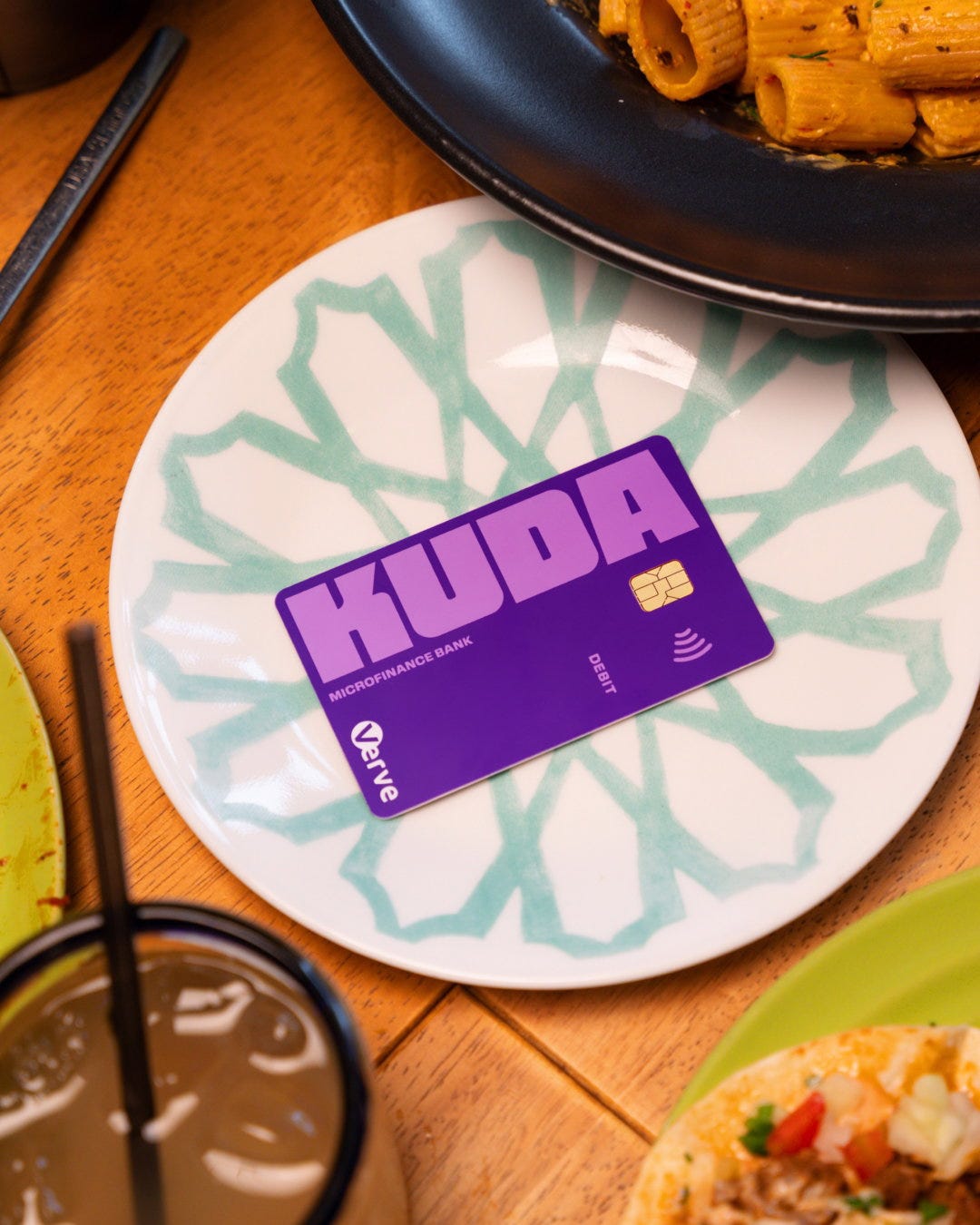
Today, Kuda joins the conversation from Lagos. Created with independent creative company Barkas, the Nigerian digital bank’s new identity spans strategic positioning, brand identity, website design and implementation across product and marketing, covering its personal and business banking. At the heart of it all is the saying ‘More Life’, which borrowed its name from a Jamaican slang phrase for wishing someone well, popularised by dancehall artist Vybz Kartel. “Born in Jamaica and now used globally, the phrase carries a universal wish for abundance – one Kuda’s audience already live and speak through music, conversation and aspiration,” says Luca Rasmussen, partner at Barkas. “In a category obsessed with features and finance jargon, it gives the brand something more human. The visual identity expresses this through vibrancy and real, everyday snapshots of life, capturing the momentum, confidence and pace of Lagos.”
Kuda was founded in 2019 by Babs Ogundeyi and Musty Mustapha, and launched as the “bank of the free”, with zero fees on cards, account maintenance and transfers. Seven years on, the new kid on the block has grown up, and now counts millions of customers. Barkas’ brief was to help it move up the lagger from challenger to established, to become more culturally relevant and to authentically represent contemporary Nigerian youth – “a new generation of aspirational Africans who are digitally savvy and intentional with their money,” says the release.
So what does that look like? Loud, purposeful, chunky and absolutely void of any gradients or uneasily happy looking characters. The new logo sees Kuda’s short, memorable name in thick, geometric letterforms inspired by Nigerian art and architecture – the stacked KU over DA is like a stamp, with four iterations developed for legibility and flexibility. The personal banking identity is splashed in a deep purple, while Kuda Business is in black as a sharper and more serious contrast. There’s also a custom Naira sign, created with local partners to reflect Nigerian culture, and a bespoke typeface specimen labelled Kuda Modena, which is designed to cut through the conservative aesthetics of the banking industry. The layout system is modular, drawing from grids and forms rooted in the same local references.
News from Ghana:
Romance scammers who are though to have targeted British victims have been arrested in West Africa as part of an operation led by authorities in London.
Almost 30 alleged fraudsters were arrested in the operation which targeted suspects in countries including Ghana and Nigeria from Tuesday to Friday last week.
Those arrested allegedly used social media profiles to target victims in Britain and the US, the National Crime Agency (NCA) said.
It added 3.7million profiles linked to scams including romance fraud were shut down by Facebook and Instagram owner Meta.
In Sasaabi, in Ghana’s Accra region, authorities arrested 19 people, seized 303 electronic devices and identified 117 trafficking victims.
Police in Nigeria’s Delta state arrested nine people and seized six laptops, 35 phones and 12 routers.
More than 100 members of international law enforcement agencies and technology companies had gathered in London to coordinate the operation.
The NCA’s deputy director of fraud Nick Sharp said investment fraud targeting British victims originates ‘primarily from overseas and West Africa’ and often involves romance scams.
He said: ‘They use the romance fraud as a way of bringing the victim in and introducing them to investment opportunities, so there’s a lot of hybrid crossover.’
Mr Sharp added many cases involving so-called sextortion are thought to originate in the region.
Sextortion is a form of blackmail where perpetrators threaten to share intimate photos of the victim online unless they agree to their demands.
Mr Sharp said impersonation scams based on ‘well-known brands’ or recognisable figures across social media platforms were also used to target victims in the UK.
It is not yet clear how many of the victims identified as part of the operation were British, or how much money individual victims lost, but the operation found $11million (£8.3million) in potential freezable funds.